A PHOTO STUDY OF IRELAND’S ENVIRONMENT
(Longer captions can be found in the nli collection)
In 2024 the National Library of Ireland (NLI) and the Environmental Protection Agency (EPA) joined forces to create a Photographer-in-Residence initiative to visually capture and record our experience of the Irish environment.
The aim of the NLI was that a selection of the resulting digital photographs would become part of the permanent national digital collections at the National Library of Ireland. The EPA aim was to create a permanent photographic record of different aspects of the impact of human interaction with the environment in both positive and negative ways; to capture the richness and diversity of our changing landscapes, but also spark a discussion about our present, and the future we are working towards.
As selected Photograph-in-Residence, Paula T Nolan called her project, ‘ReViewing Ireland: A Photo Study of Ireland’s Environment’ and travelled to each of the 26 counties between April 2024 and May 2025 using public transport and an ebike. In each county she pursued two or more issues, taking photographs and interviewing people. The interviews became captions for the almost 400 photos selected for permanent public access in the National Photographic Archives of the National Library of Ireland.
https://catalogue.nli.ie/Search/Results?lookfor=Paula+T+Nolan&type=AllFields
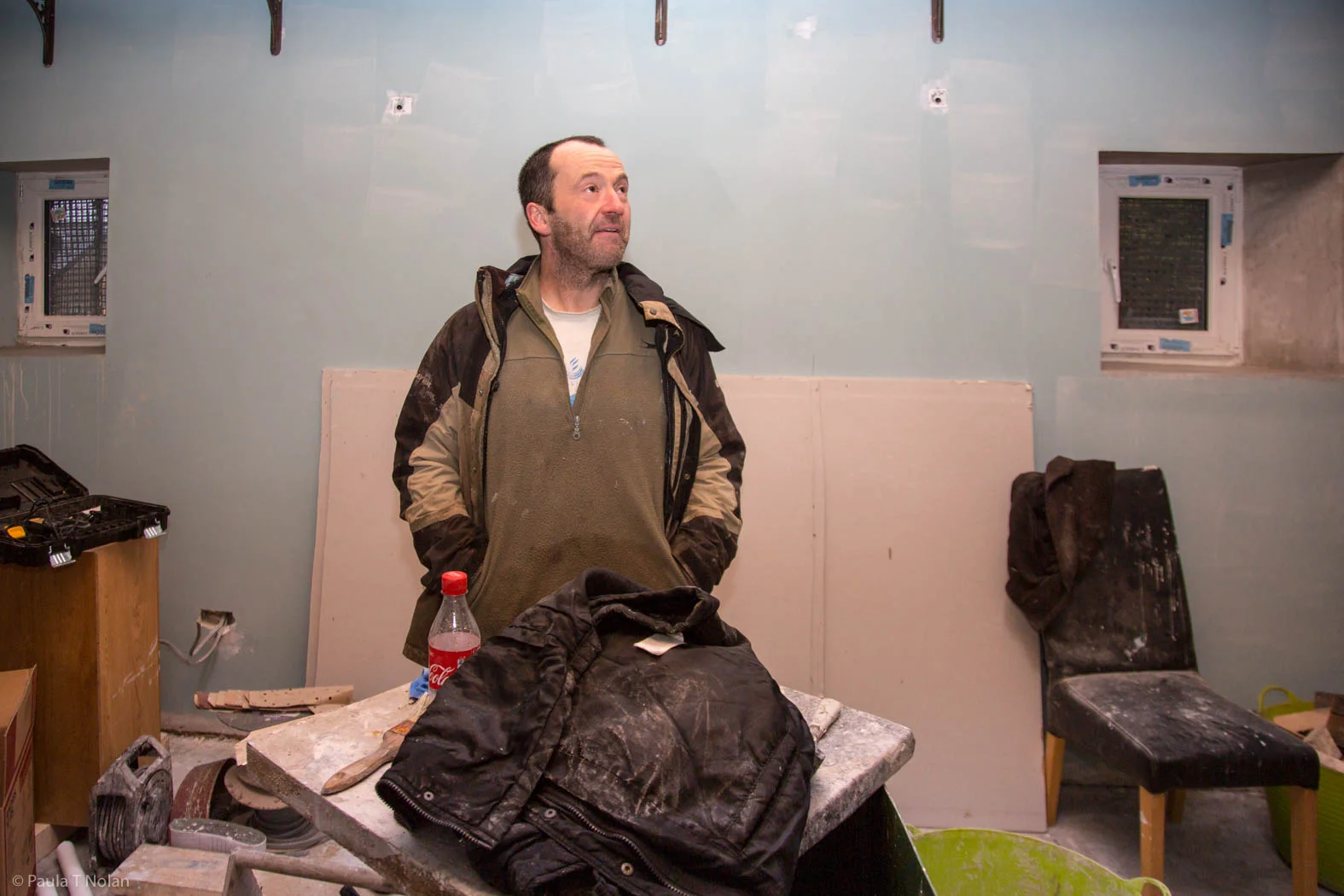
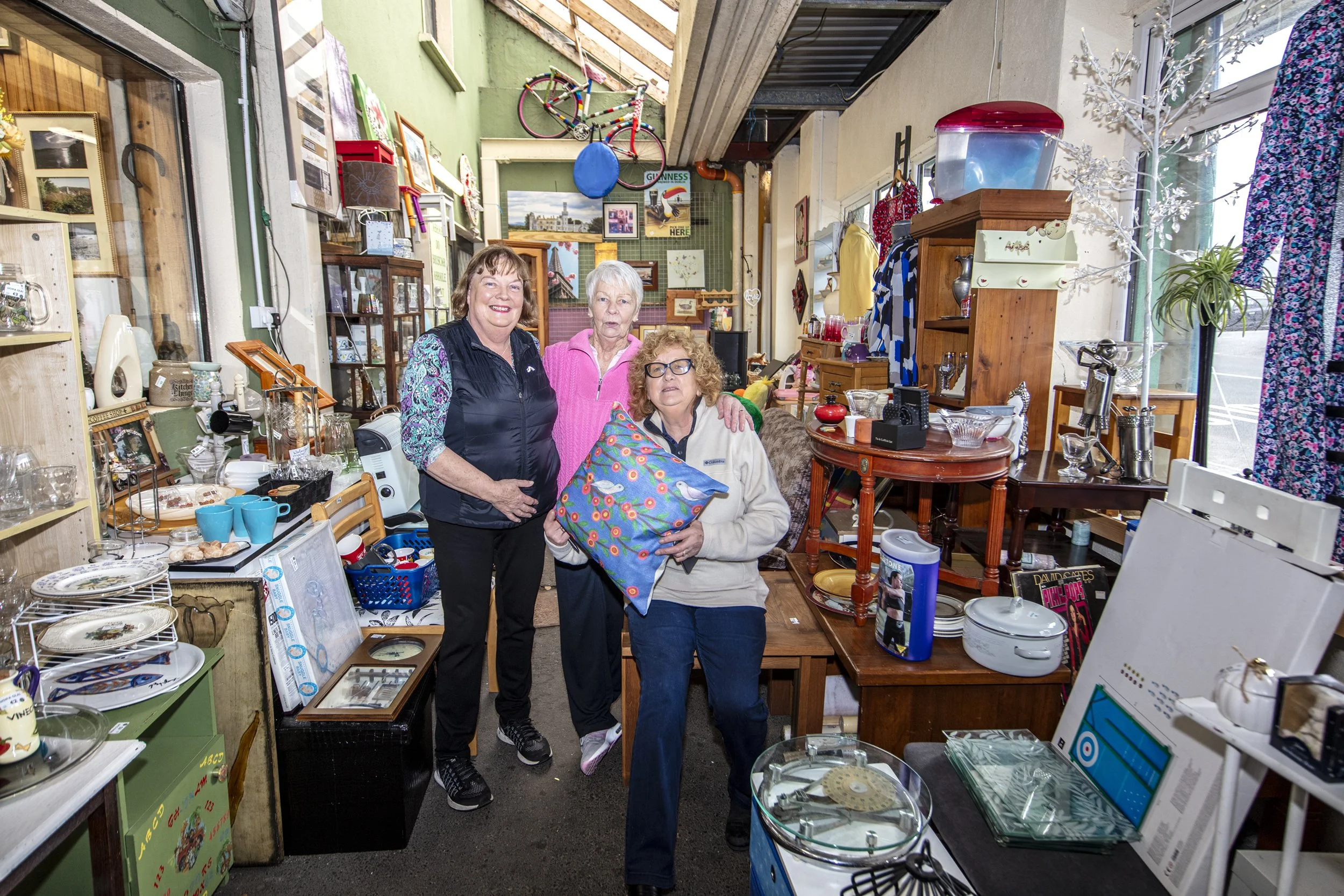
Siopa Glas in Ballon, County Carlow, is a large retail outlet for second-hand goods. It is all about inclusivity, sustainability, the circular economy and making Ballon an environmentally responsible village. Pictured are Bernie Mullins, Breda Wray and Máire George.
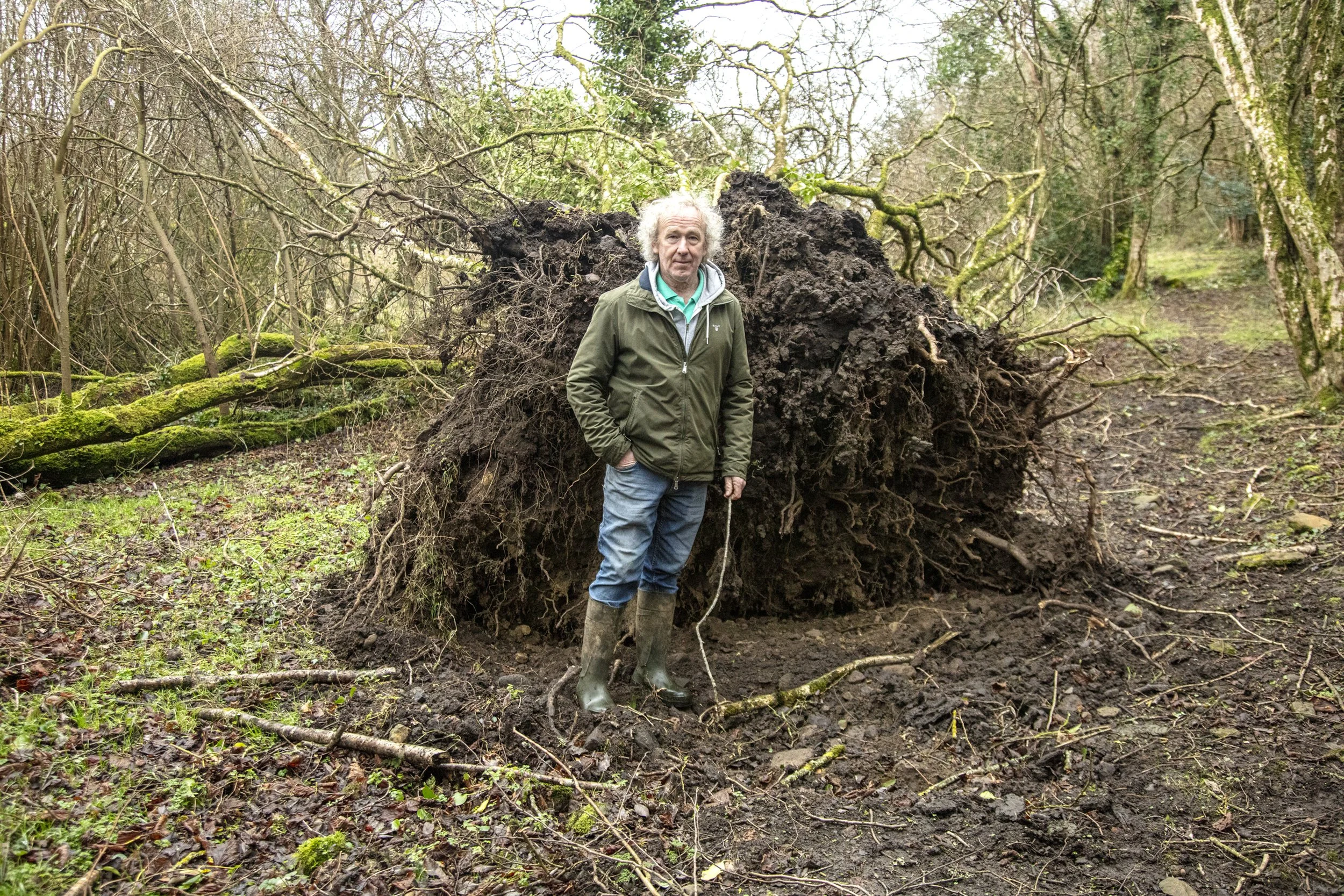
Sean Thornton of Cavan Adventure Centre near Butler’s Bridge stands beside a large tree uprooted by Storm Eowyn. Sean is an example of many who inherited farms but to make a living, diversified. Sean hires out kayaks and provides land and water-based activities for all ages on the Lough Oughter waterway system and the wider UNESCO Global Geopark. Sean is passionate about maintaining a healthy diversified eco system on his farm, attracting an abundance of wildlife.
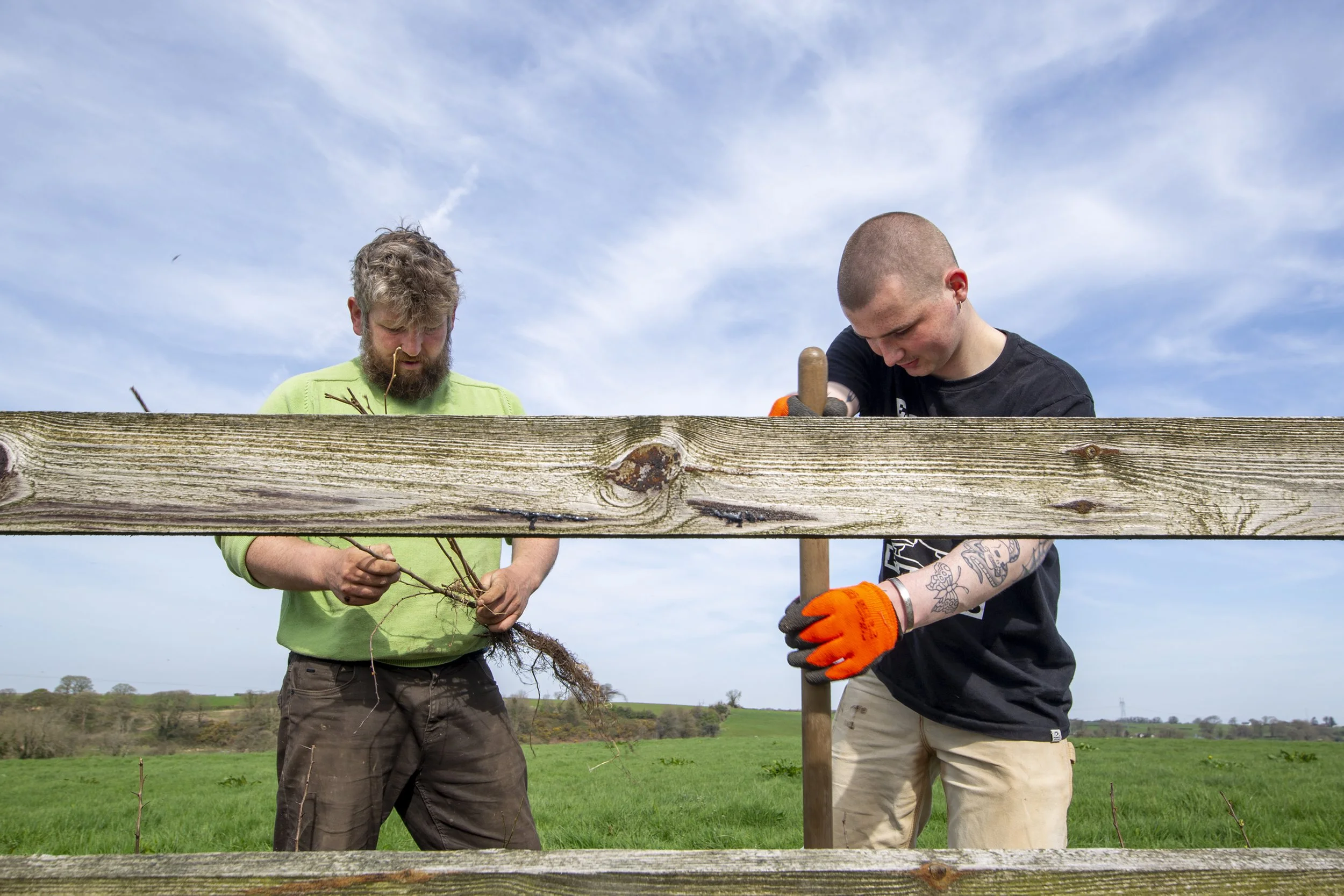
Jeremy Turkington, Seed Collector and Seed Bank Coordinator, helping with the tree planting at Dromoland along with Enda O’Brien, one of the volunteers from Hometree’s Spring Experience Week. Proceeds from the planting of 1500 trees over two days will go towards funding the work of Hometree. As the name suggests, Hometree was established to create a forest regeneration centre of excellence built around the best practices, agroforestry techniques, and the most vibrant and healthy organic tree nursery.
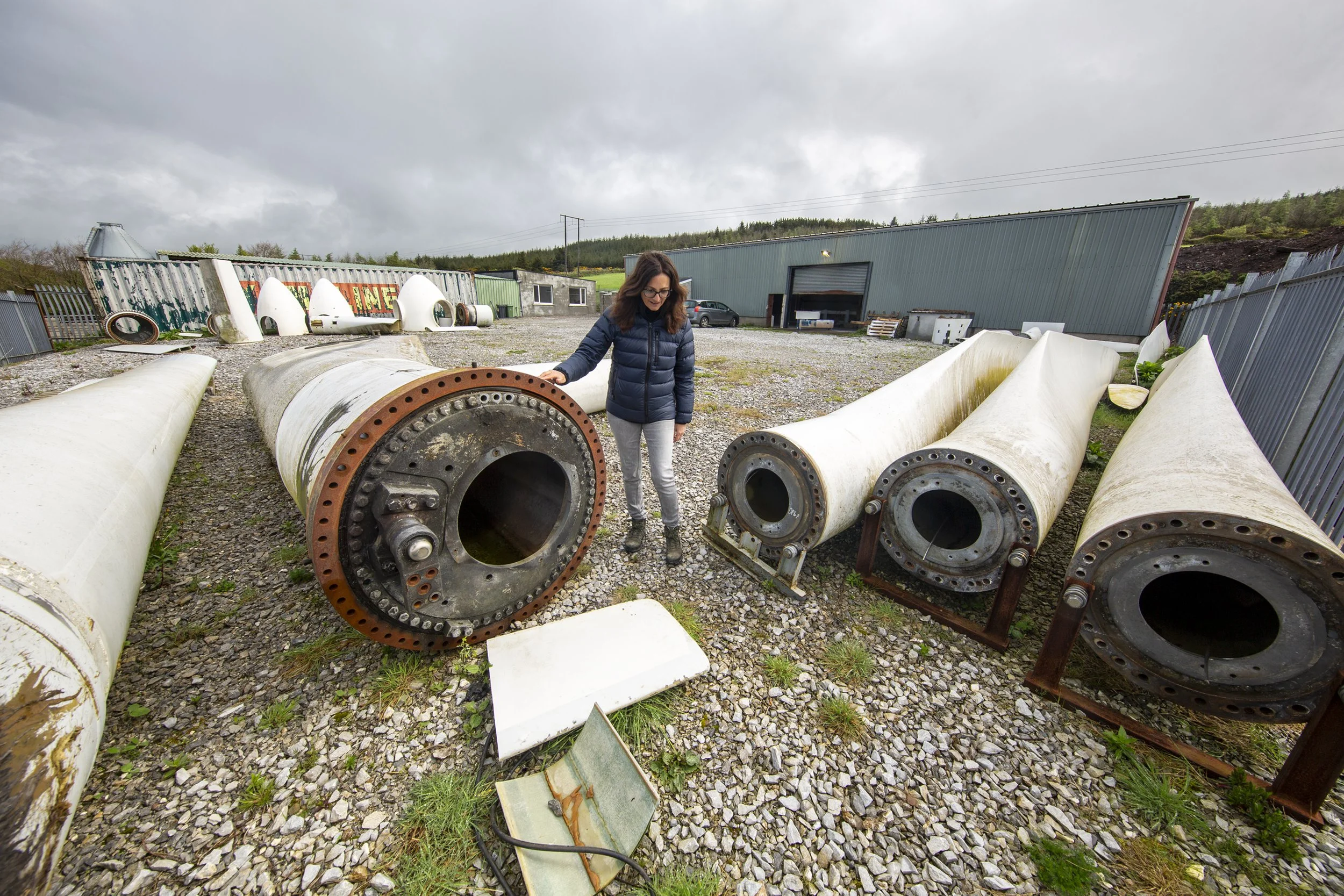
Bladebridge repurposes decommissioned wind turbine blades into sustainable infrastructure. A rotor blade serves twenty years then is replaced, old blades often ending up in blade graveyards. Here you see Angie Nagle of Bladebridge at their warehouse and site in Bottlehill, near Mallow, County Cork.
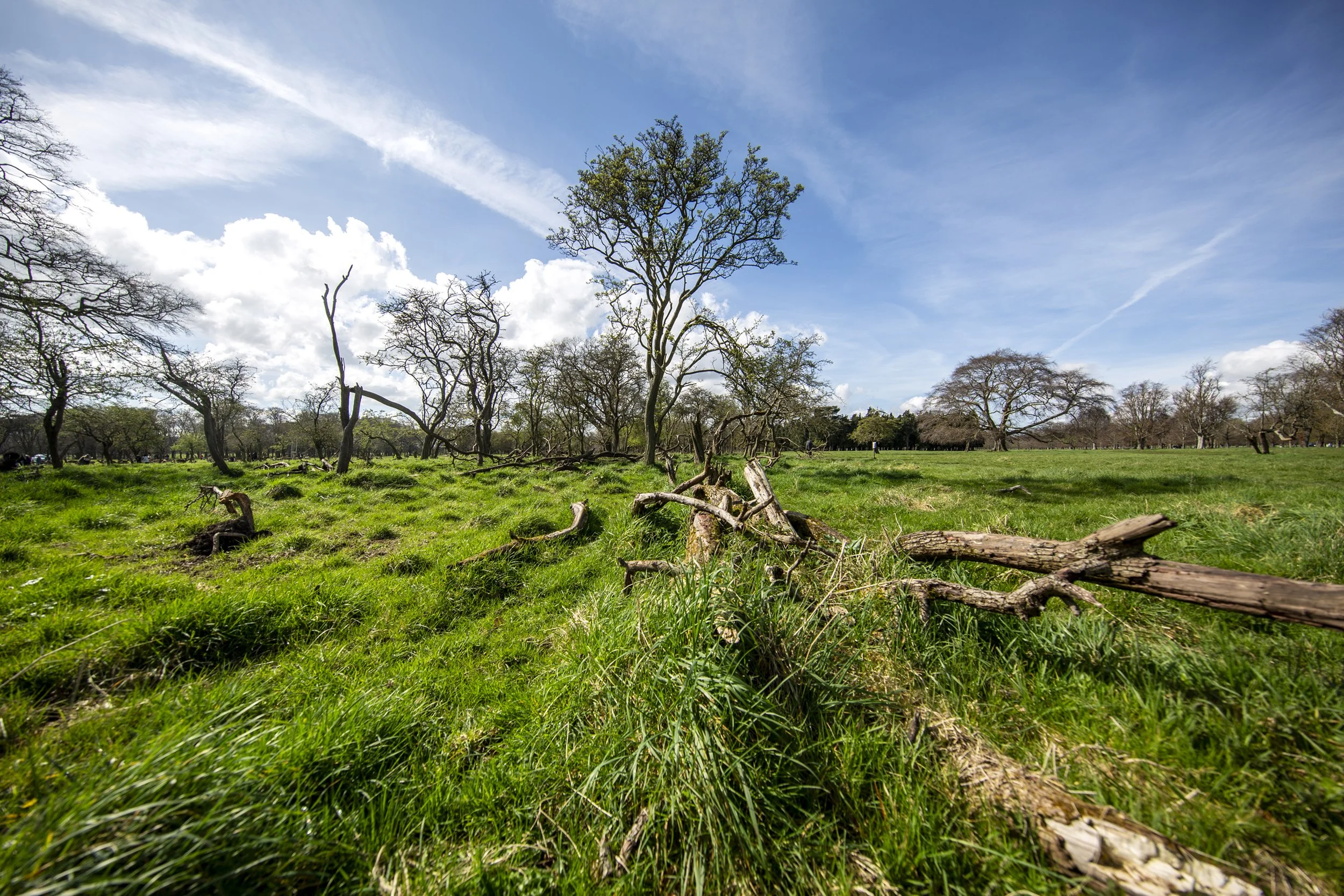
Leaving deadwood where it lands provides food, habitat and shelter to a variety of plants, animals and fungi which in turn are preyed upon by other animal groups, while also benefitting nutrient retention and site fertility. In the Phoenix Park Conservation Management Plan 2011, a stated action was to leave trees to die naturally, to leave deadwood on site (in selected areas) where there is no danger to users of the Park.
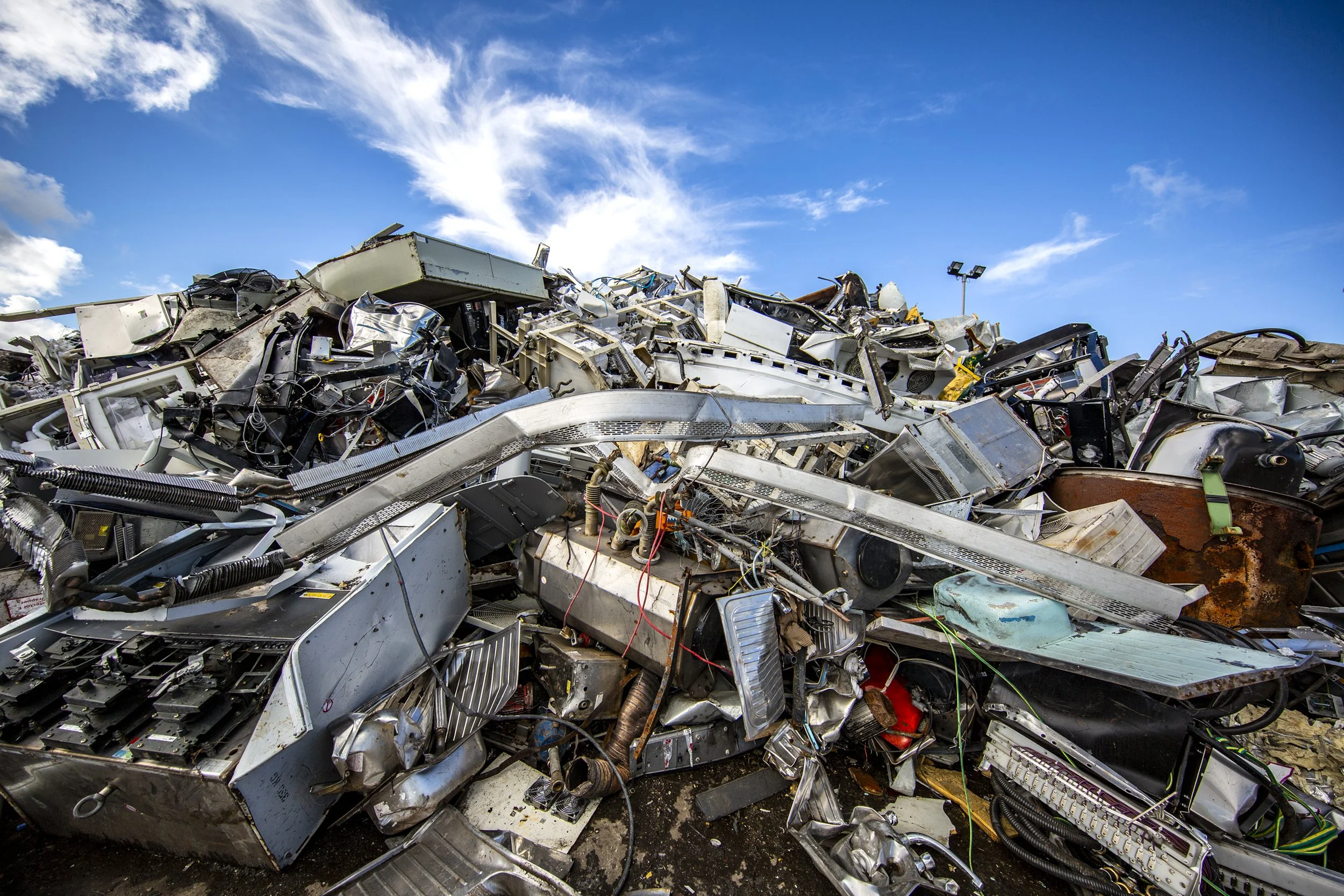
Piles of shredded scrap metal prepared for transportation and for export at Galway Metal Company Ltd, Oranmore. The EPA’s 2022 report ‘Circular Economy and Waste Statistics’ (published in 2024) revealed that in 2021, metallic waste accounted for 463,000 tonnes, or 2.6 percent, of all waste generated in Ireland.
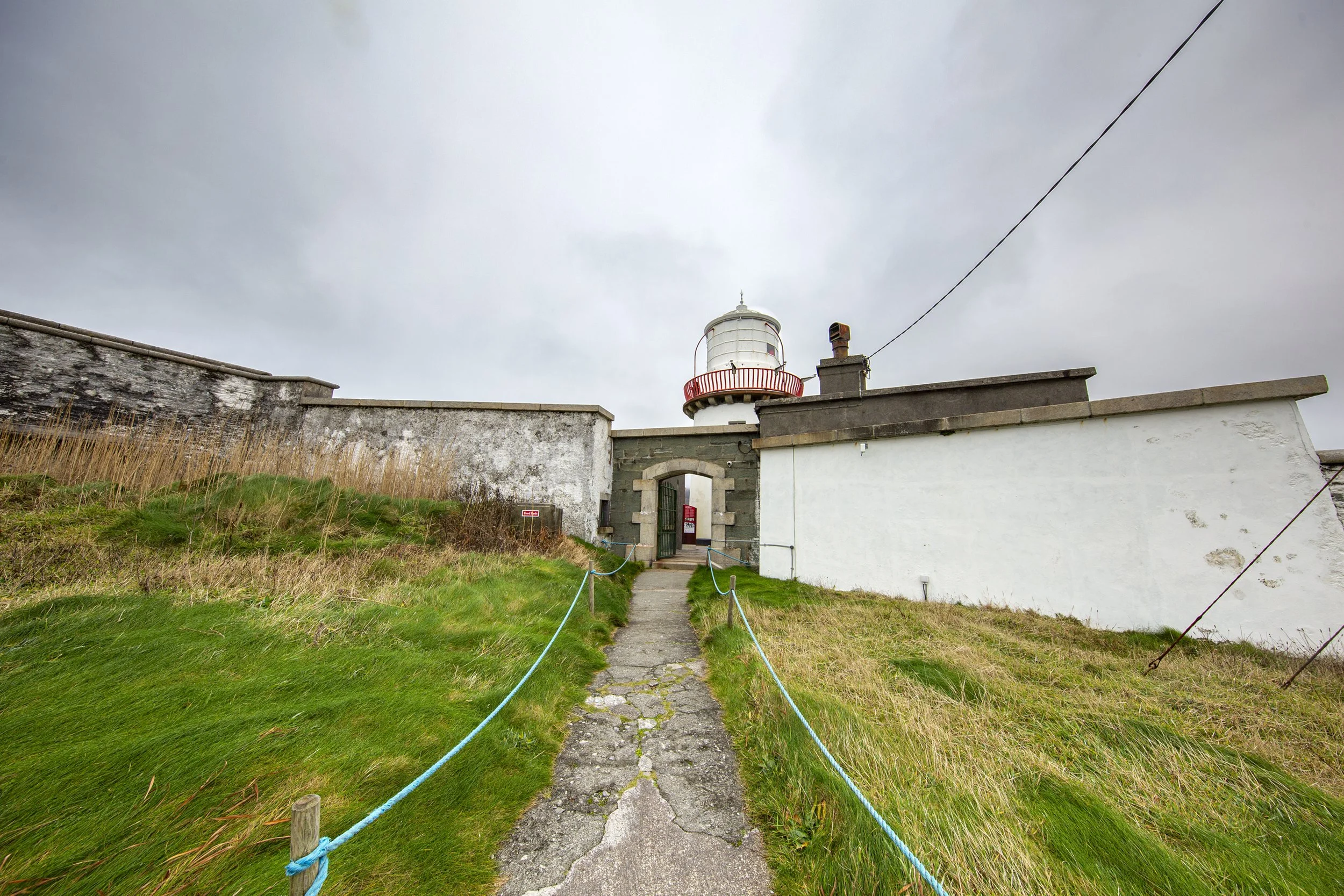
Valentia Island Lighthouse need to provide facilities compatable with a tourist attraction, and as there is a small café, toilet facilities were required. Lucian Horvat, CEO of Valentia Island Development Company CLG, explained their solution: The wastewater is pumped out into a reed bed, a certain reed that has bacteria in the roots that break down the waste in the water. It then goes down into a second reed bed, just to ensure that the water is fully clean, and then goes back into the ocean. The first reed bed is to the left of the lighthouse in this photo, the second sloping on the right, sloping down to the sea.
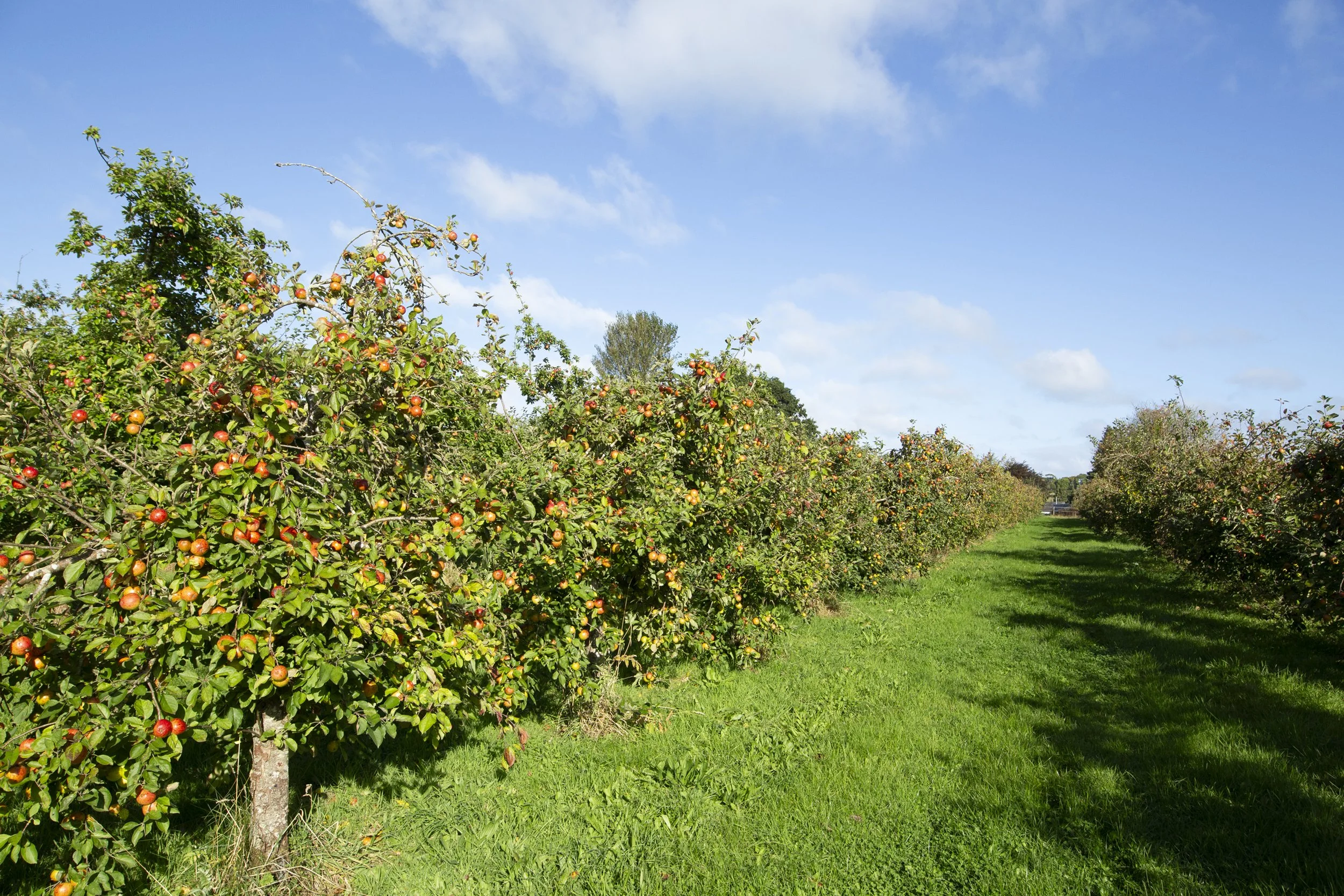
Rows of apple trees in the orchard at Highbank Orchards Kilkenny in September, 2024. Apples have been produced at Highbank since the 1970s, and Rod and Julie Calder Potts have been running this farm organically since the early 1990s, concentrating on the apple orchards. Of huge interest is that their methods of organic apple production is based on the wisdom of Shumai monks who visited Highbank some years ago – you can read more in the longer caption in the online collection. Rod and Julie are members of Farming For Nature, an organisation that works with farmers to enhance the natural health of the countryside.
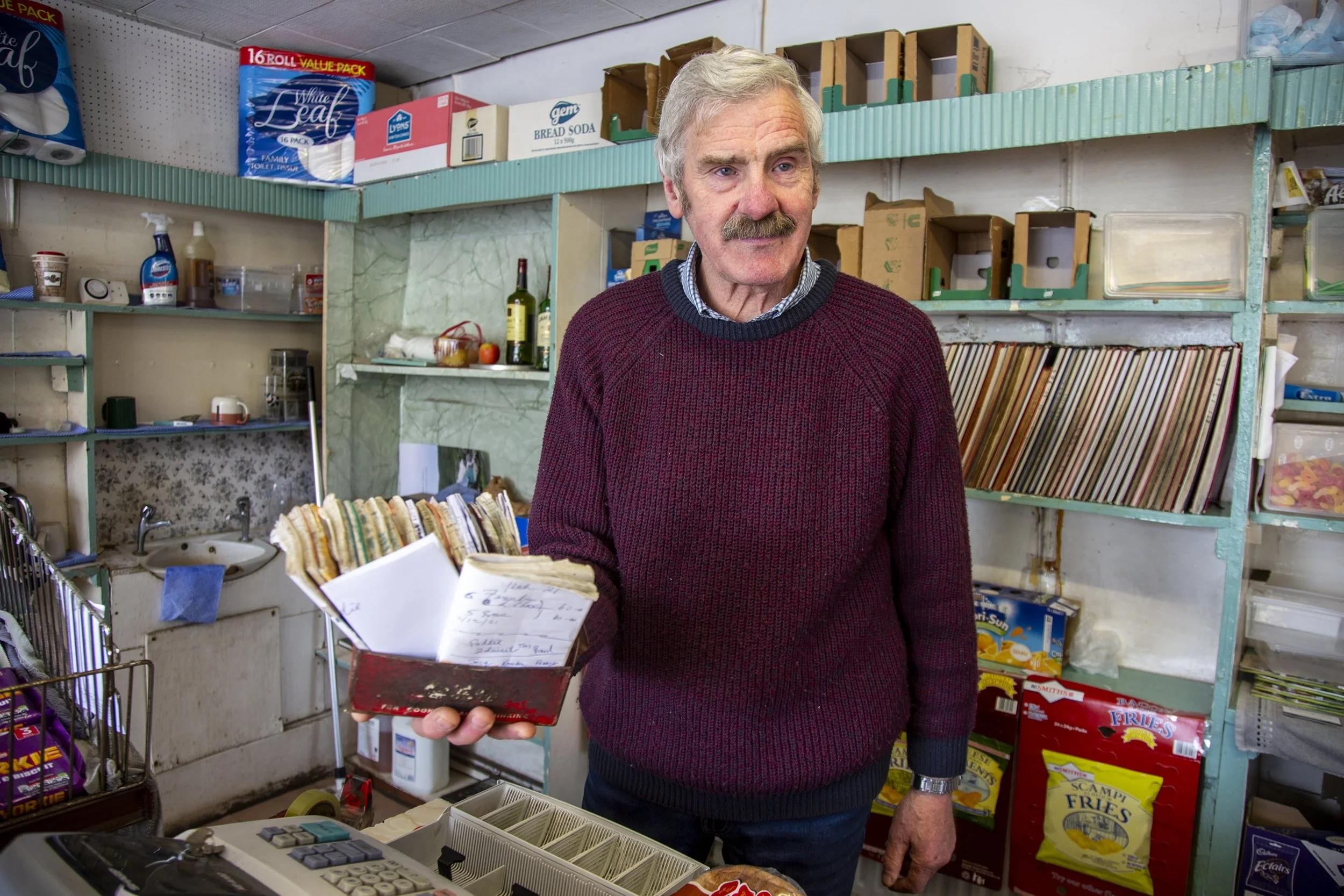
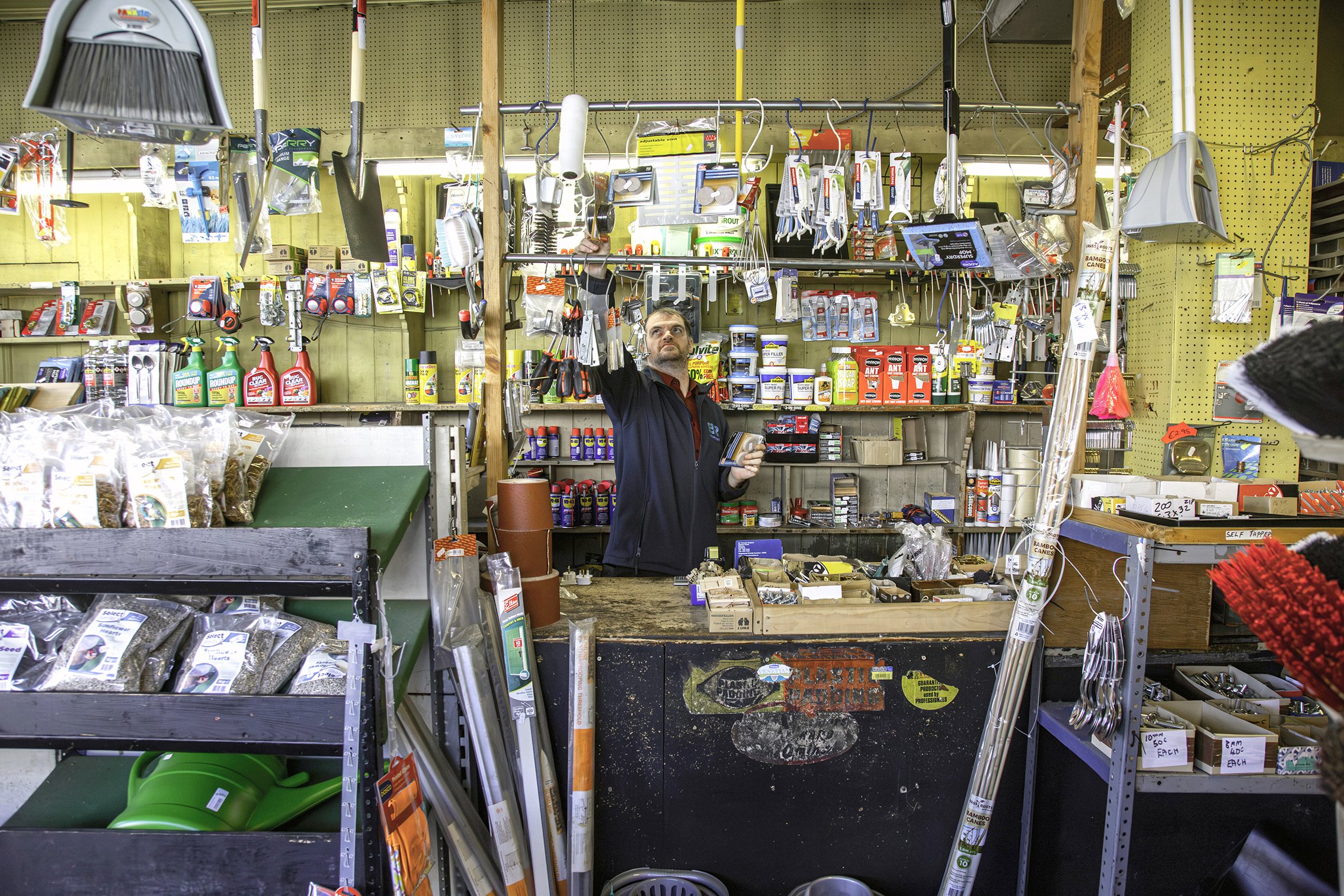
Kincora Stores – Carey’s – in Portarlington, County Laois, had been in the Carey family since 1903, and was due to close a few days after this photograph was taken. Tom Carey, pictured here, took over in 1970 on the death of his father. In his hand is the box of account books where Tom kept track of purchases, allowing people to settle their bills on pay-day, just one of many ways the shop facilitated the needs of the local community. This sort of kindness, and generosity of spirit, is a huge loss to any community, and these kind of shops are fast becoming a thing of the past. In their place people drive longer distances, often in heavy traffic, to large car parks attached to large supermarkets. In terms of becoming less car-dependent, the loss of the local ‘needle to an anchor’ type shop has increased car-dependence significantly.
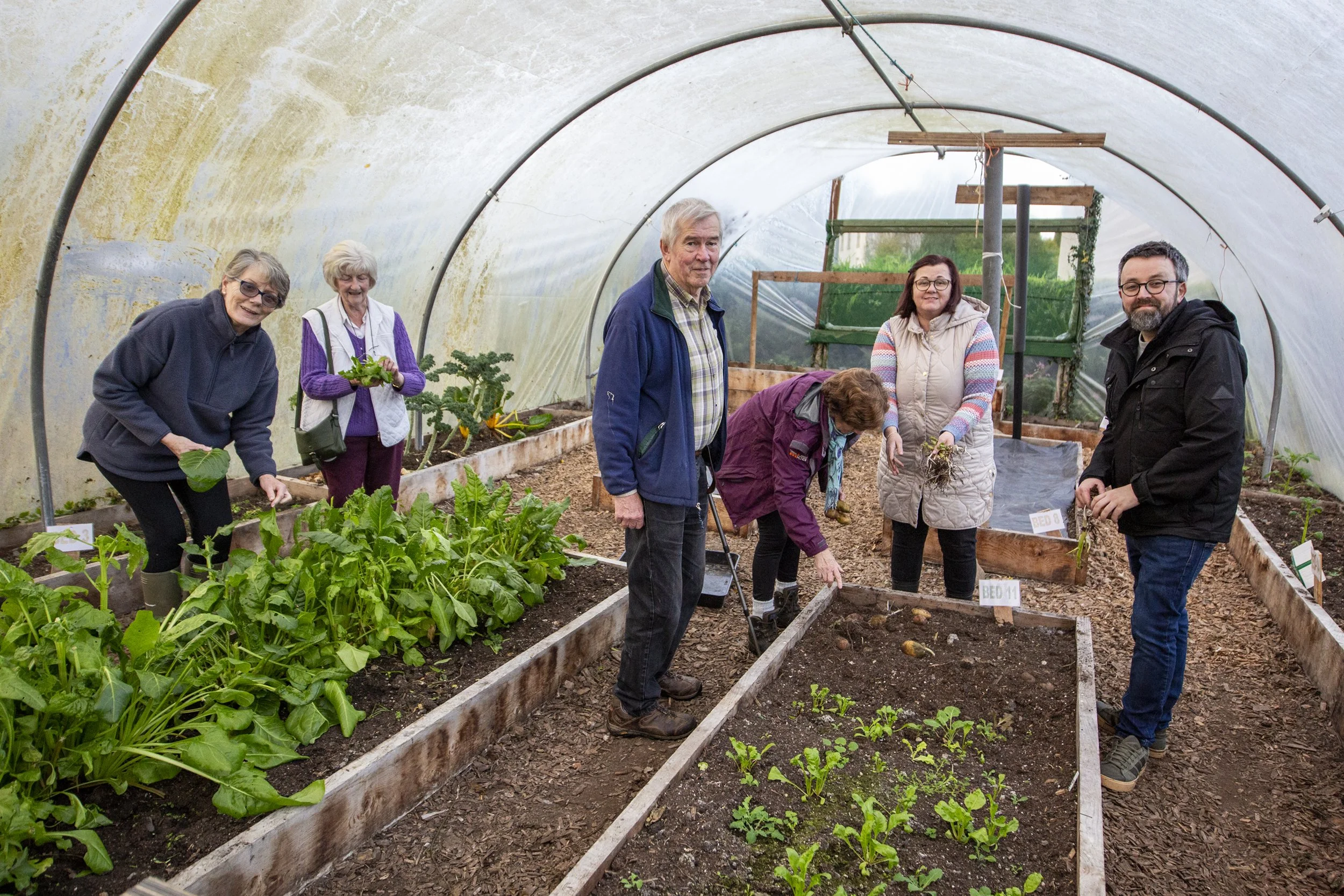
Leitrim boasts a Community Garden Network. The goal of the network is to facilitate community garden groups in sharing their experience and competencies, to spotlight the rich diversity and dedication of community garden groups in Leitrim, and for all groups to work together to address common issues and achieve shared goals. Photographed here is volunteers from Mohill Community Garden working in one of their polytunnels. Left to right, Ivy Boddy, Bridie McIntyre, Martin Murray, Mary Taylor, Therese Foy and Caillin Reynolds (Community Outreach Worker Leitrim Development Company).
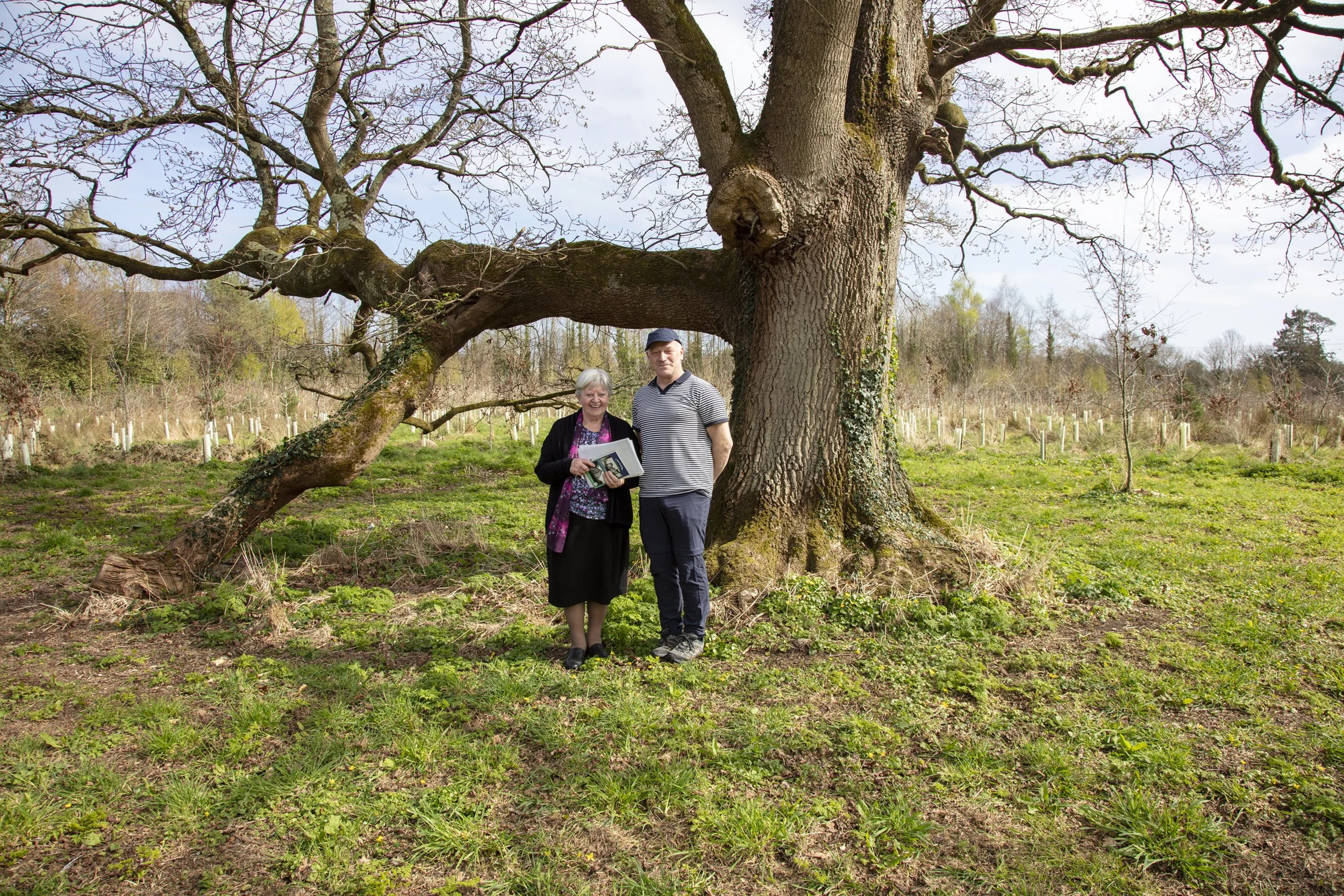
Sr Brigid of the Little Company of Mary, and John Le Gear standing under an old oak tree in the Infinity Forest, Milford Convent, Castletroy, Limerick. This newly planted Infinity Forest is located on a small area of land owned by the sisters. The overall aim in planting this forest is to protect and enhance for biodiversity and leave a legacy that will promote healing health, spirituality, and education. John Le Gear, while employed by Coillte, is volunteering with the project on his own time. It is a great example of planting trees you may never get to sit under.
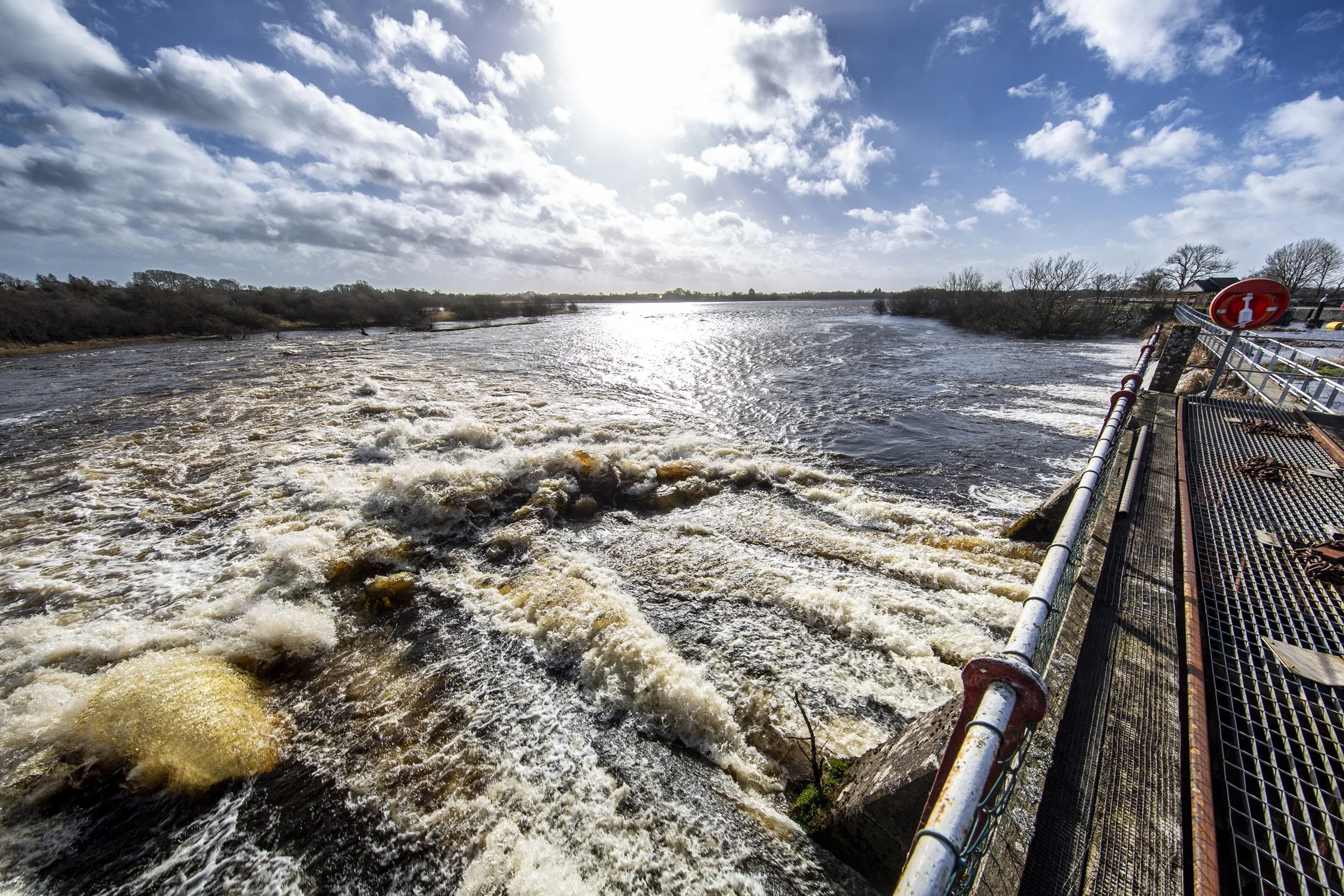
View from the footbridge over Tarmonbarry Weir, Longford. Tarmonbarry Weir is 150km upstream of Limerick city and the next major water barrier after Limerick. The fish pass at this weir is widely condemned as not fit for purpose, being referred to as a temporary structure never replaced, or simply a part-constructed fish pass never completed. This is of grave concern as fish get trapped at Tarmonbarry when migrating in the upper River Shannon. Generally in Ireland at this time there are concerns that fish passes are not being treated as a high priority.
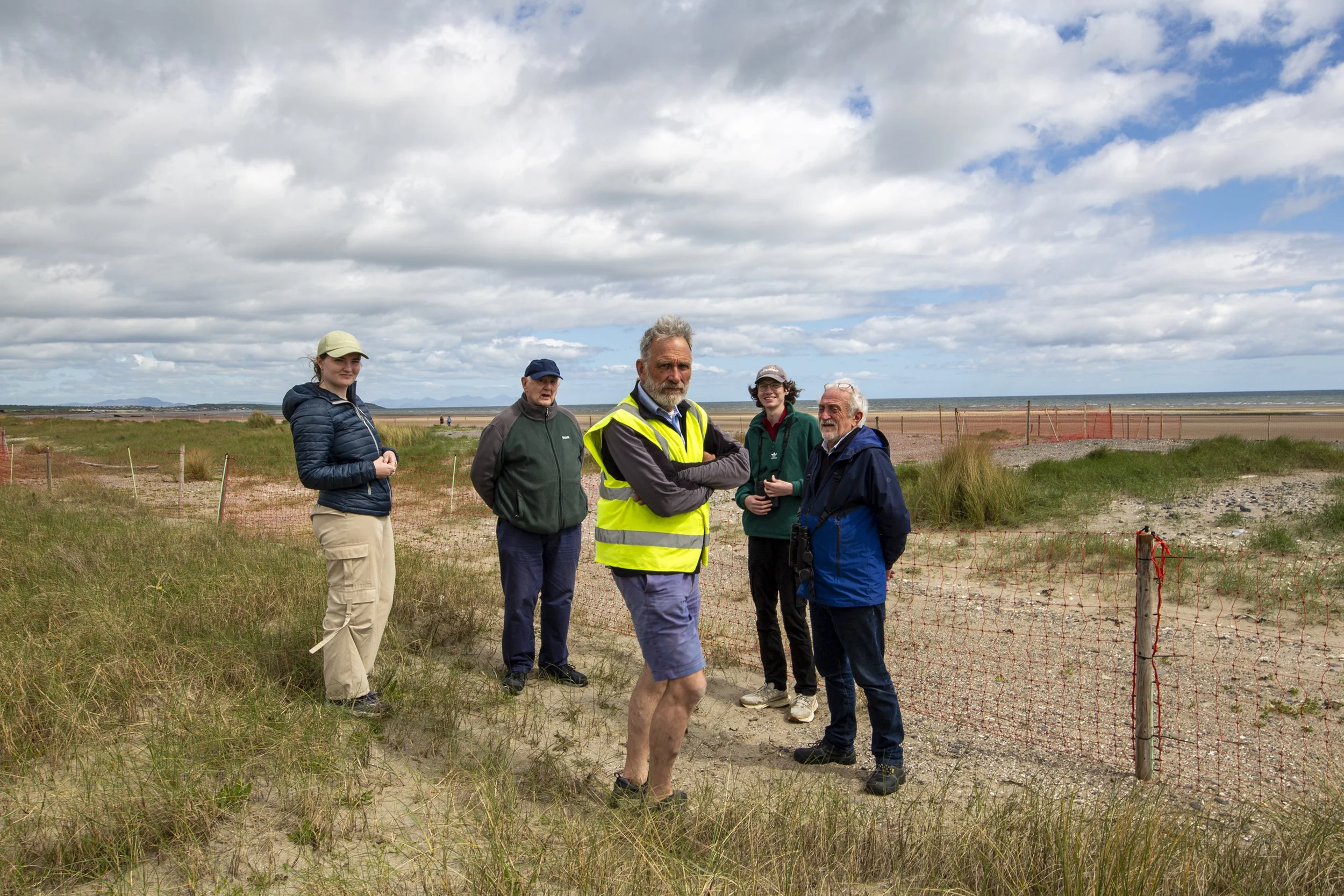
The Louth Nature Trust supports a halt to biodiversity loss through the restoration a protection of natural habitats. One of their many projects takes place at Baltray, County Louth, where I met with Dominic Hartigan. Himself and a team of volunteers had spent the morning working on erecting fence protection for terns at breeding season. This photograph shows some of the red fencing erected to protect breeding terns from walkers and dogs on the beach. In the distance is Carlingford. From left to right: Darci Breslin, Matthew Byrne, Dominic Hartigan, Ivan McKenna and Tommy Doherty, some of the volunteers on the day.
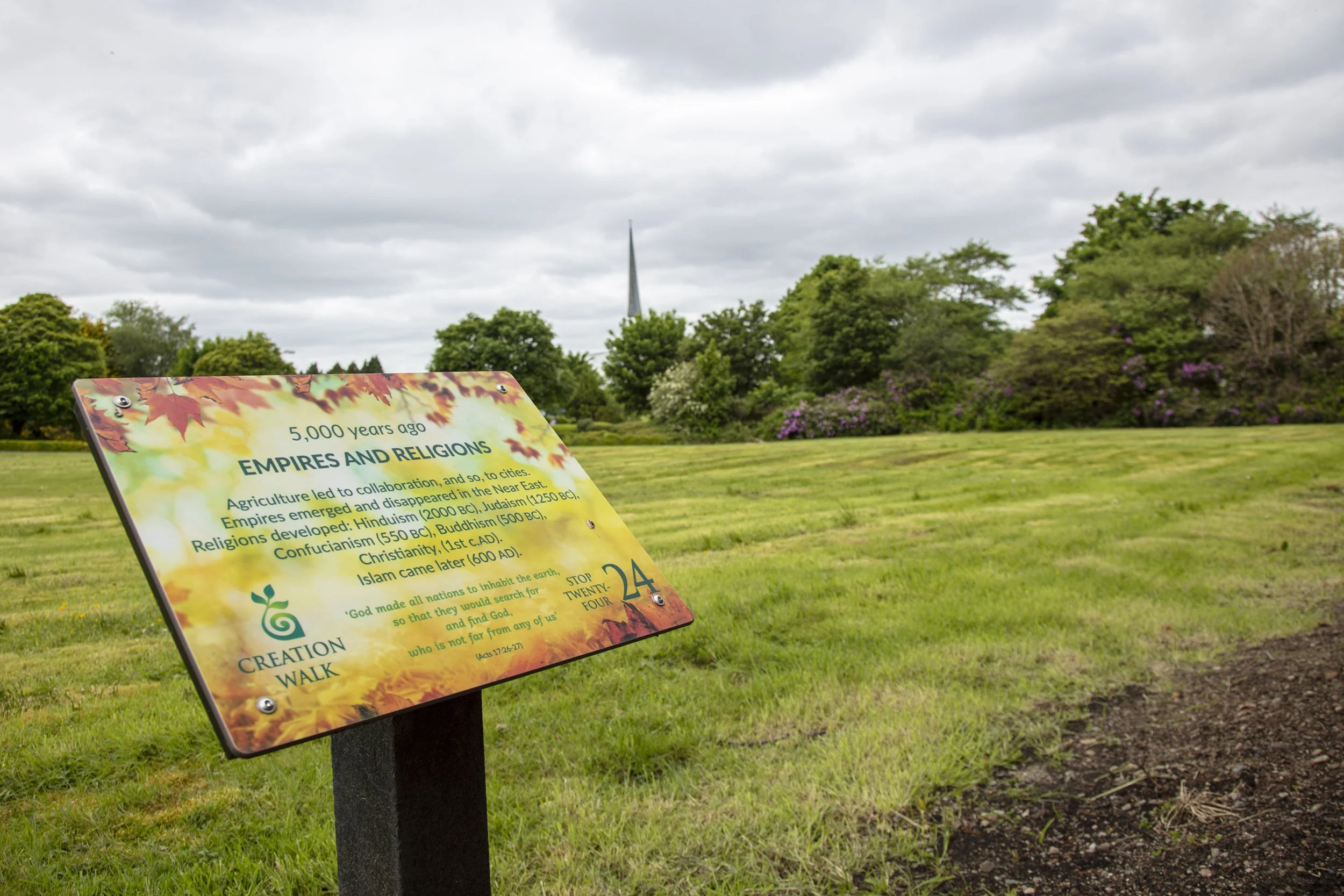
The ‘Creation Walk’ at Knock, County Mayo, is a circular prayer walk beneath trees with 30 signposts linking Science with Sacred Scripture. Brian Grogan SJ, who wrote the book to accompany this walk (Creation Walk: The Story of a Small Blue Planet) explained the movitvation by saying Pope Francis’ concern with the environment led to his own ‘eco-conversion’, and feeling obliged to do what he could for the environment in collaboration with others. Knock is a well-known place of pilgrimage since 1879, when there is said to have been an apparition of the Blessed Virgin Mary. Visitors come to Knock from all over the world, with about 1.5 million pilgrims visiting each year. So ‘Creation Walk’ plays an important role in converting pilgrims to take personal responsibility for our shared environment, and to help put to rest the scripture vs science divide.
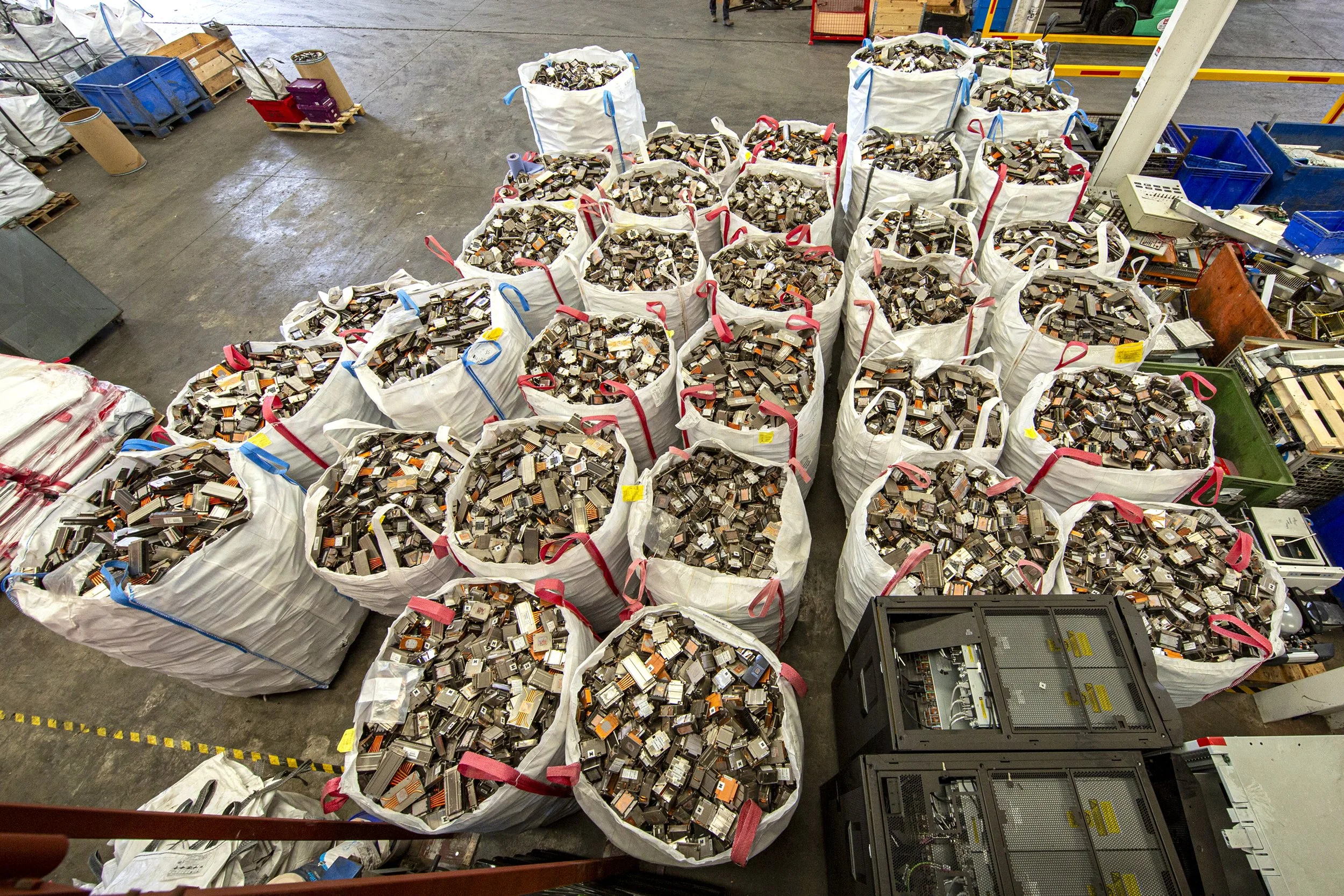
What you have here are huge bags of heatsinks in the wearhouse of Irish Metal Refineries in Duleek, County Meath. A heatsink is a component used in electronic devices to dissipate heat and prevent overheating. It is typically made of aluminium or copper. Each bag here contains close to 1000 kg/net. Up until recently before my visit, IMR had a record of recycling 98 percent of the material brought to them. Martin Murphy of IMR was proud to tell me that it was now 100 percent. The component that had caused the shortfall was the tip of the cable that goes into your phone to charge. Such a small item, but multiplied by millions quite the problem.
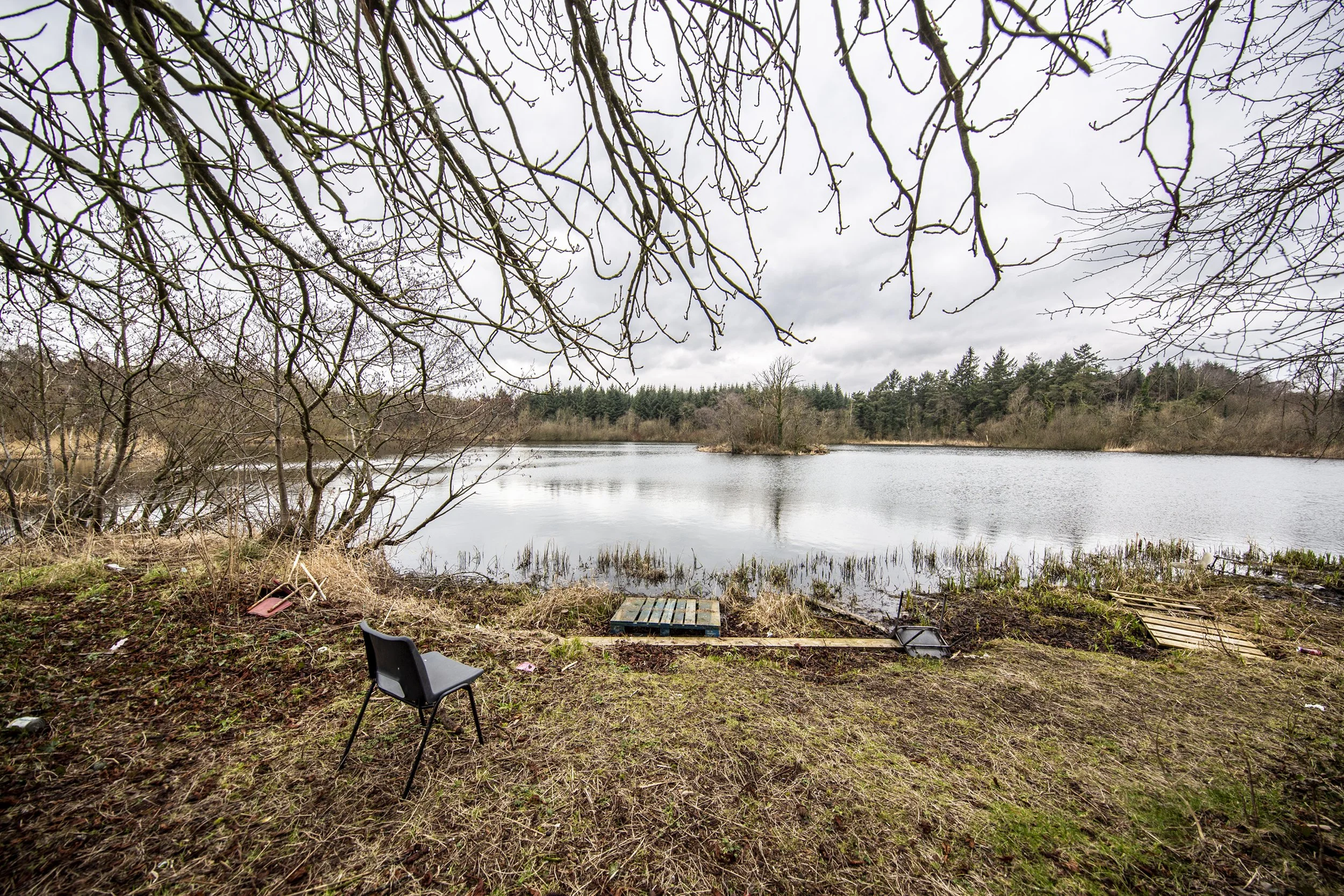
The County Monaghan Wetland Action Plan aims to develop an integrated plan for the conservation of the wetland resource in County Monaghan, through co-operation and engagement with a wide range of partners and community groups. Extensive work has been undertaken in identifying and characterising the ecological character of wetlands throughout the county, producing a valuable dataset containing information on 710 wetlands to date (February 2025). This photograph shows Convent Lake, situated in the grounds of Saint Louis Convent and School, directly adjacent to the centre of Monaghan town, and shows the ‘crannóg’ in the centre of the lake. The town boasts three wetlands, unusual for an area of urban settlement: Convent Lake, Peter’s Lake and Mullaghdun Lake.
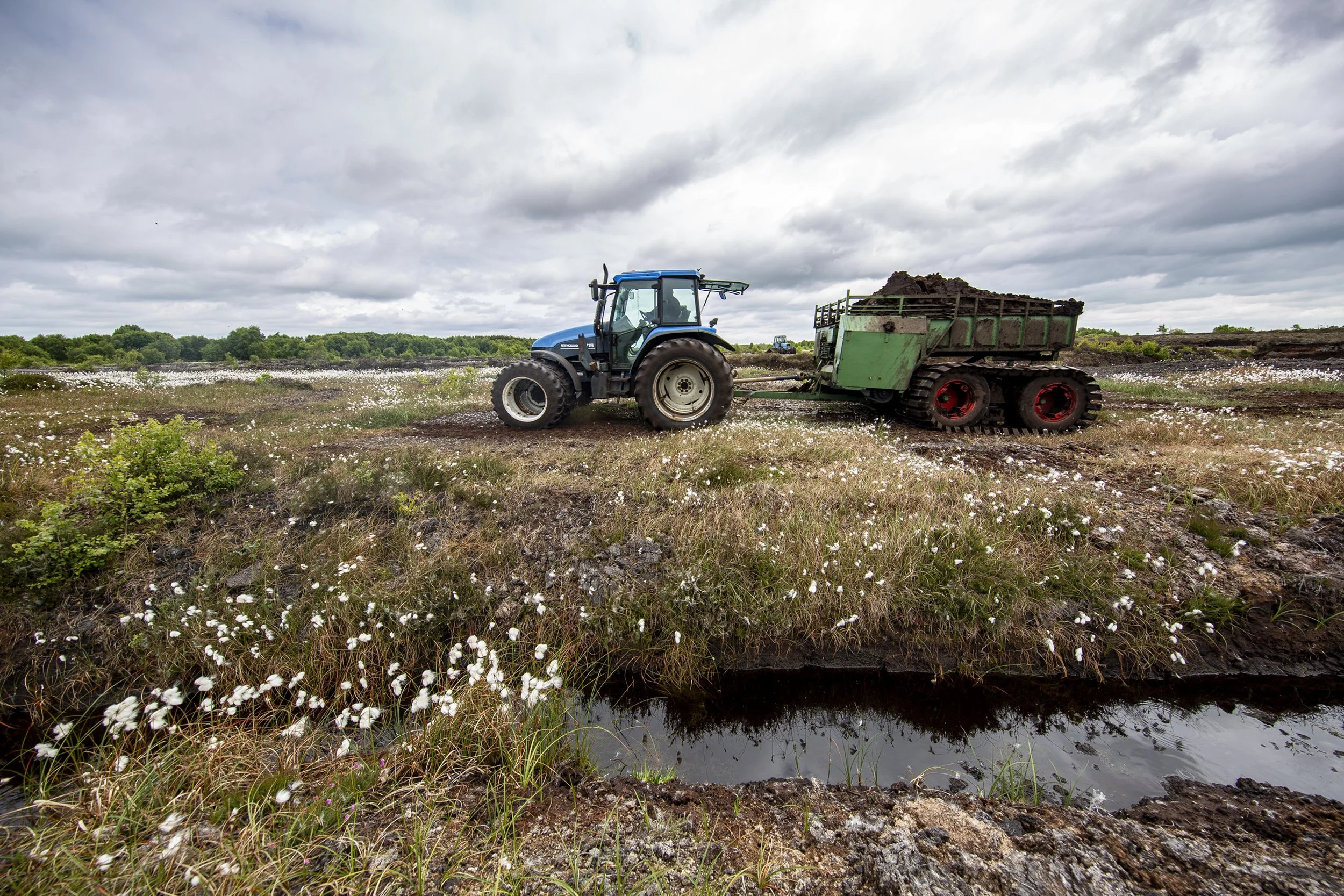
Cushina Bog in County Offaly is worked on by the owners of the land, and is not a commercial bog. The owners of the land have Rights of Turbary, so collect turf for their own use. Desmond Fitzpatrick, seen here in his tractor laying down turf, has Rights of Turbary on Cushina Bog. He says, “when you have your turf home, at least you know you have heat for the whole winter, and there’s no costs going to surprise you.”
When visiting Strokestown House and Gardens they were in the process of creating a new ‘Wild Garden’, a section of their already renowned gardens dedicated especially to biodiversity. In their own words: ‘This area is lightly managed to care for native species: the hedges, trees, plants and flowers offer potential food and shelter for wildlife. Small insects, beetles and snails living under the leaf litter are food for birds and hedgehogs. Red squirrels gather nuts from the small forest of hazel trees. The pond – an original feature of the garden – provides water for wildlife and attracts newts, moorhens, damselflies and dragonflies.
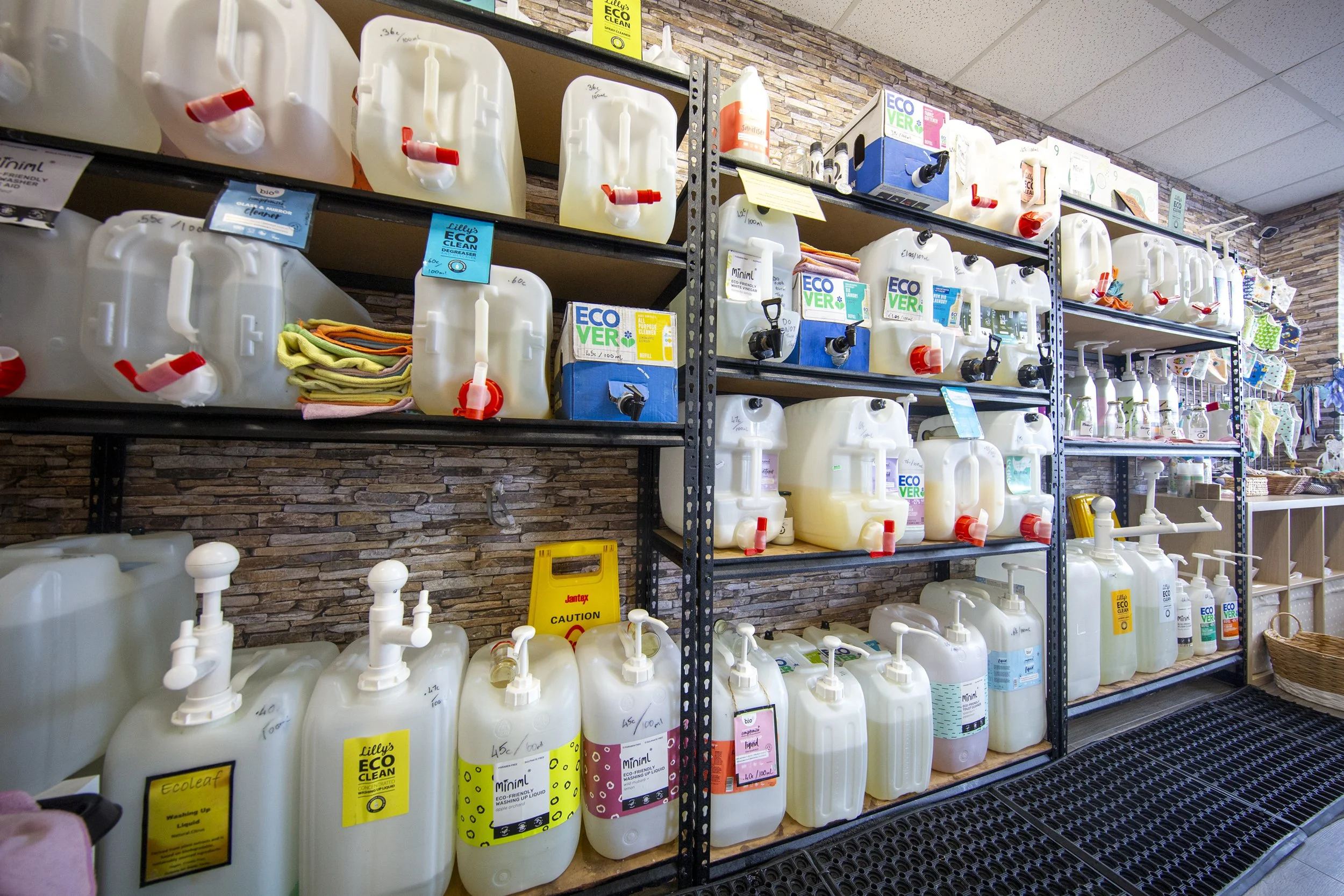
‘All Things Natural’ is an excellent example of one of the numerous shops popping up all over Ireland to offer consumers a chance to purchase nature-friendly household cleaning products, and to reuse the containers of these products. Edel Burke lives in West Sligo in a townland called Skreen, and has four children. She is deeply passionate about all thing’s nature, thus the name of her shop. Edel says, “Plastic waste is the most highlighted topic when it comes to conversation in my shop, of course the reason for this is because our shops ethos is to reduce the amount of plastic waste used daily.”
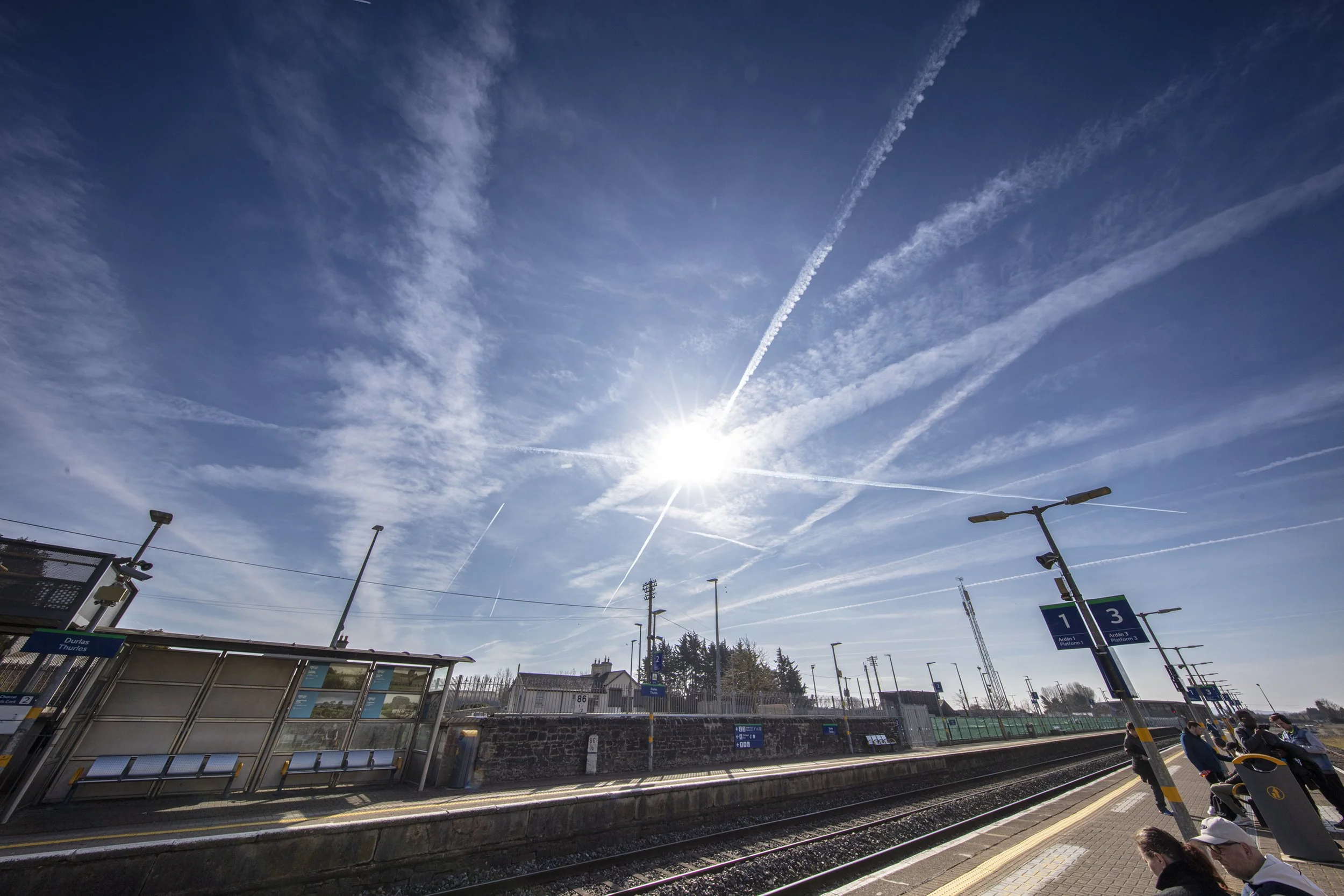
At 10am on Thursday 20 March, 2025, I counted 22 airplane trails across the sky over Thurles Train Station. This observation is not intended to feed into conspiracy theories about the trails. It simply means in a matter of a few minutes, 22 planes flew overhead, creating clouds of vapour in an otherwise cloudless sky. Thurles is on Dublin, Shannon, New York and Boston flight paths.
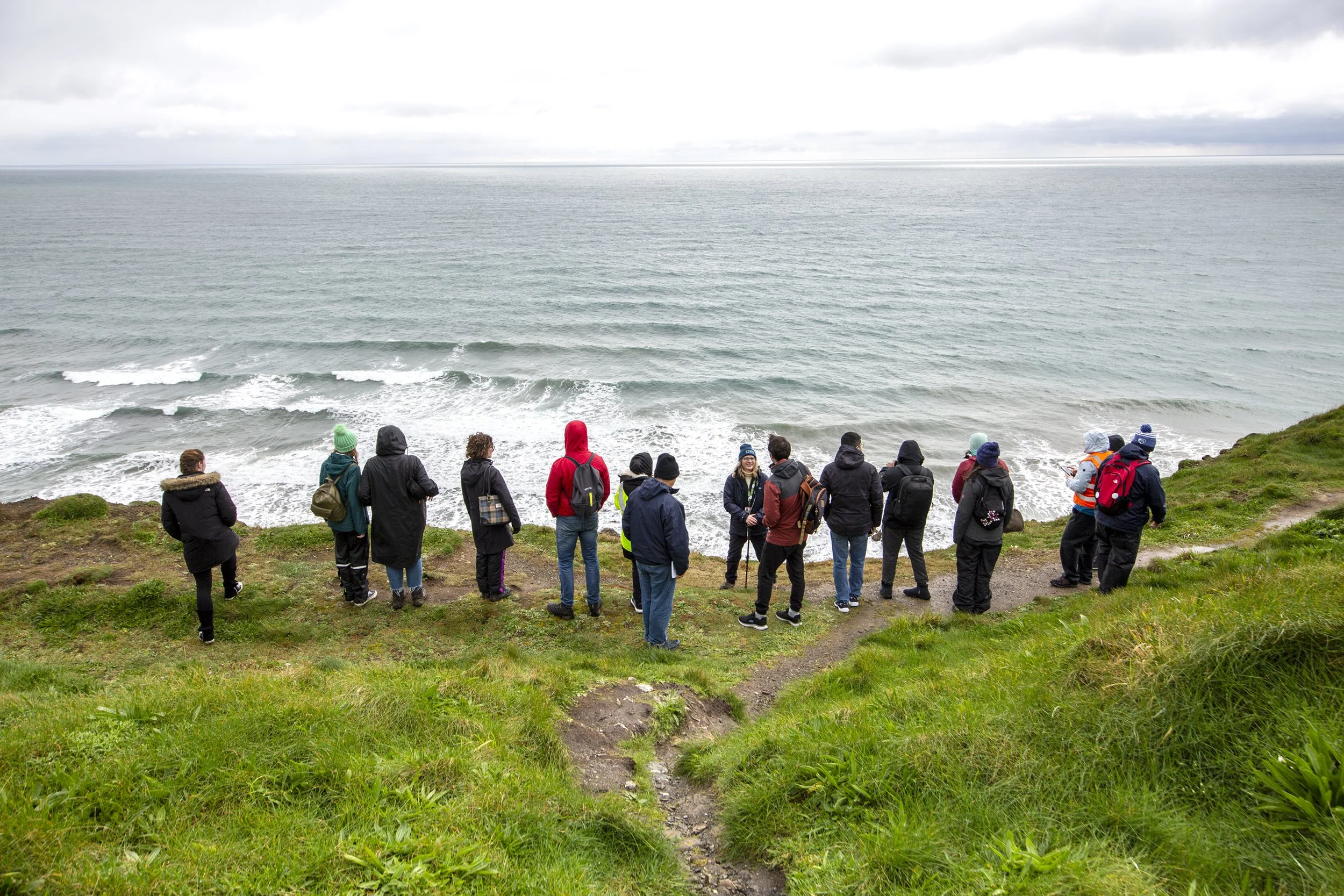
This photograph shows a group of scientist from ENVIRON 2024 on a tour a tour of the Copper Coast, a UNESCO Global Geopark that extends 25m along the South East coast of County Waterford. Specifically, they are standing on the cliffs opposite Tankardstown Mine. You can see that the scientists are standing on a ‘track’ right by the cliff. This is the remains of the railway track that allowed the mined copper to move efficiently from Tankardstown to Bunmahon, and from there further afield. The imprint remaining of this railway track tells a story of erosion, as it was once several meters further away from the cliff edge than now. Ireland’s has about 7400km of coastline, and currently about 20% or 1400km is at risk of coastal erosion.
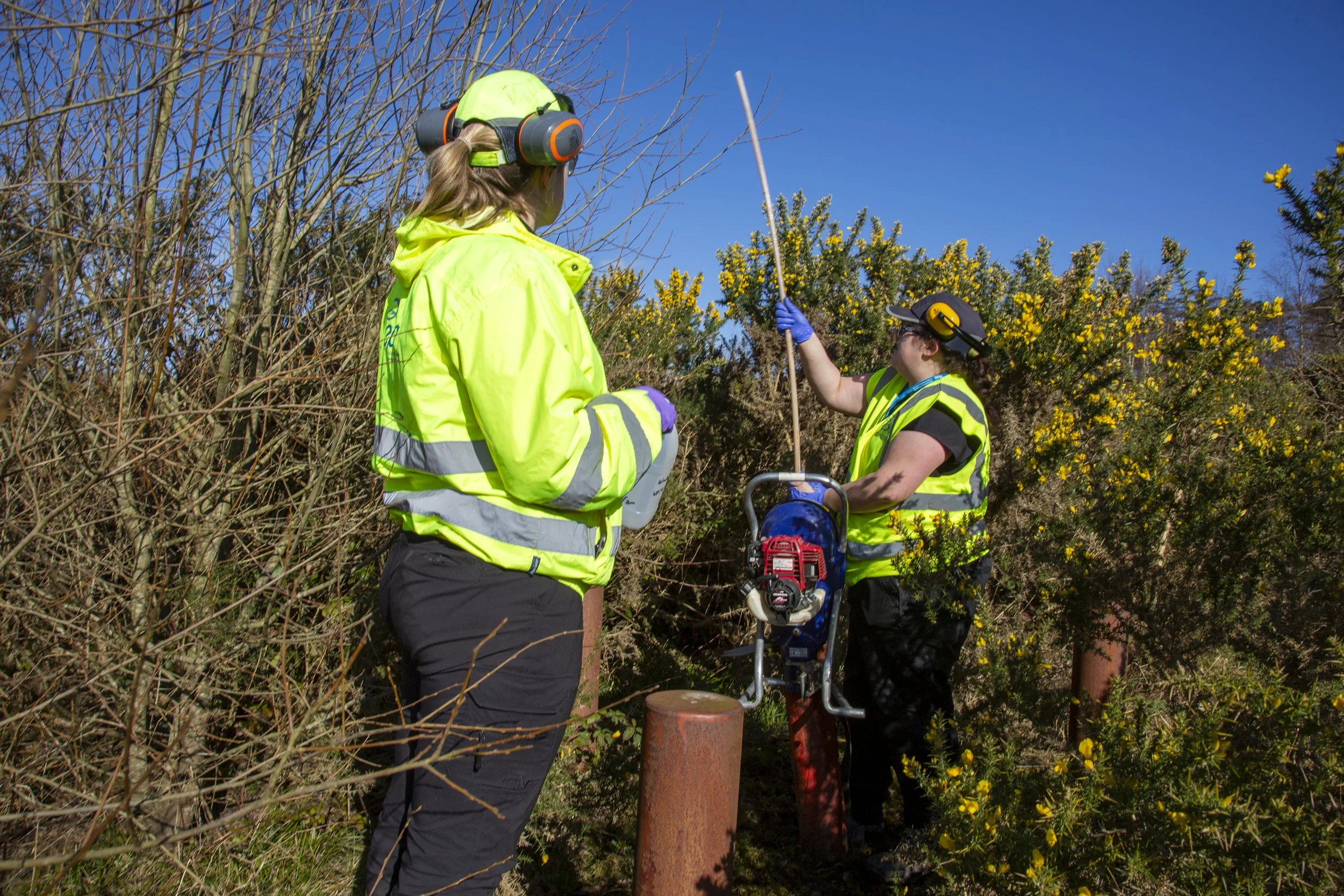
ReViewing Ireland took a trip with Environmental Protection Agency (EPA) Ireland experts for routine groundwater testing at a closed landfill site in Wexford. This routine testing is done by pumping up water from deep wells drilled around a site. This allows the EPA to monitor the area around a landfill to check that leachate from the landfill waste is not making its way into the surrounding environment. Here we see Tara Sweetman (Scientific Officer III, EPA) and Jessica Graca (Scientific Officer II, EPA) pumping up groundwater for testing at a landfill site in Wexford. The EPA monitor groundwater levels at over 90 locations nationwide, and levels are recorded every 15 minutes by dataloggers at each site. Equipment used is calibrated throughout the year to ensure accuracy. Long term hydrometric records are essential for informing the sustainable use of our water resources.
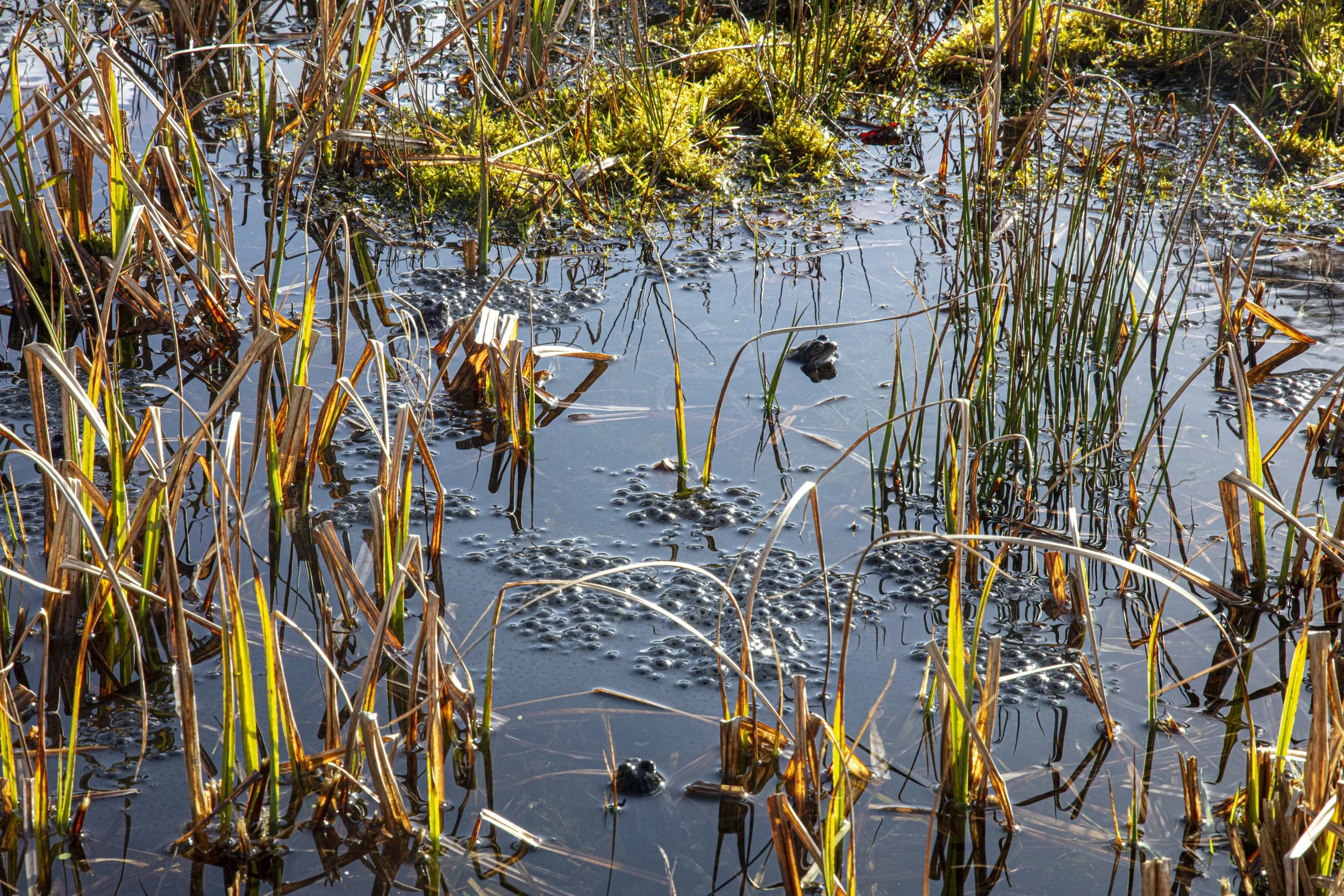
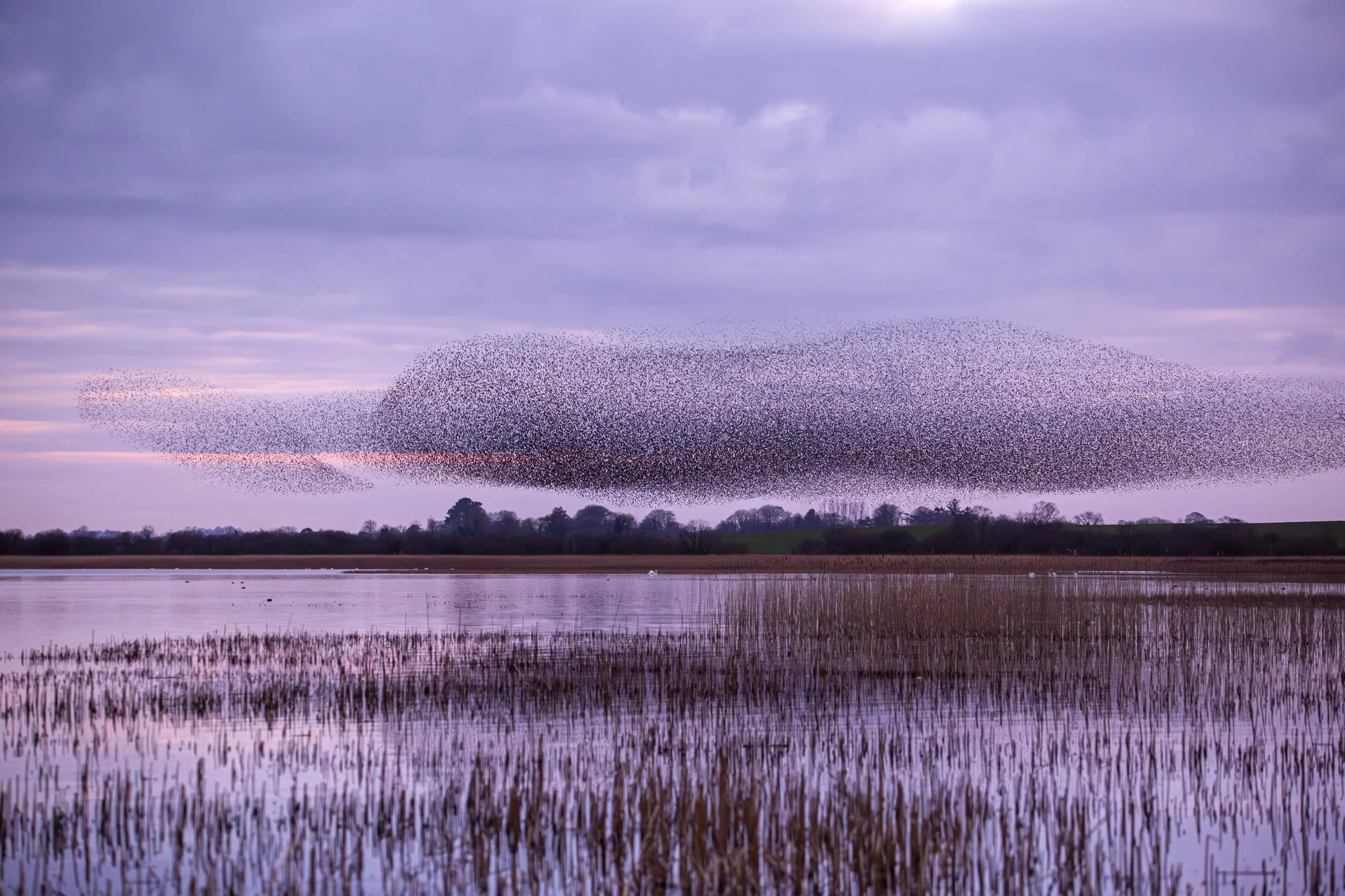
Viewing Starling murmurations is such a popular pasttime Westmeath County Council’s logo was designed based on this phenomenon. This photograph shows a murmuration as seen from Ladestown, Lough Ennell, Co Westmeath on 2 March 2025. Murmuration season goes from November to March, and ended a couple of weeks after this photograph was taken. Thank you to Philomena Brady who generously shared her great knowledge of photographing murmurations with me, and took me to the best places to view them.
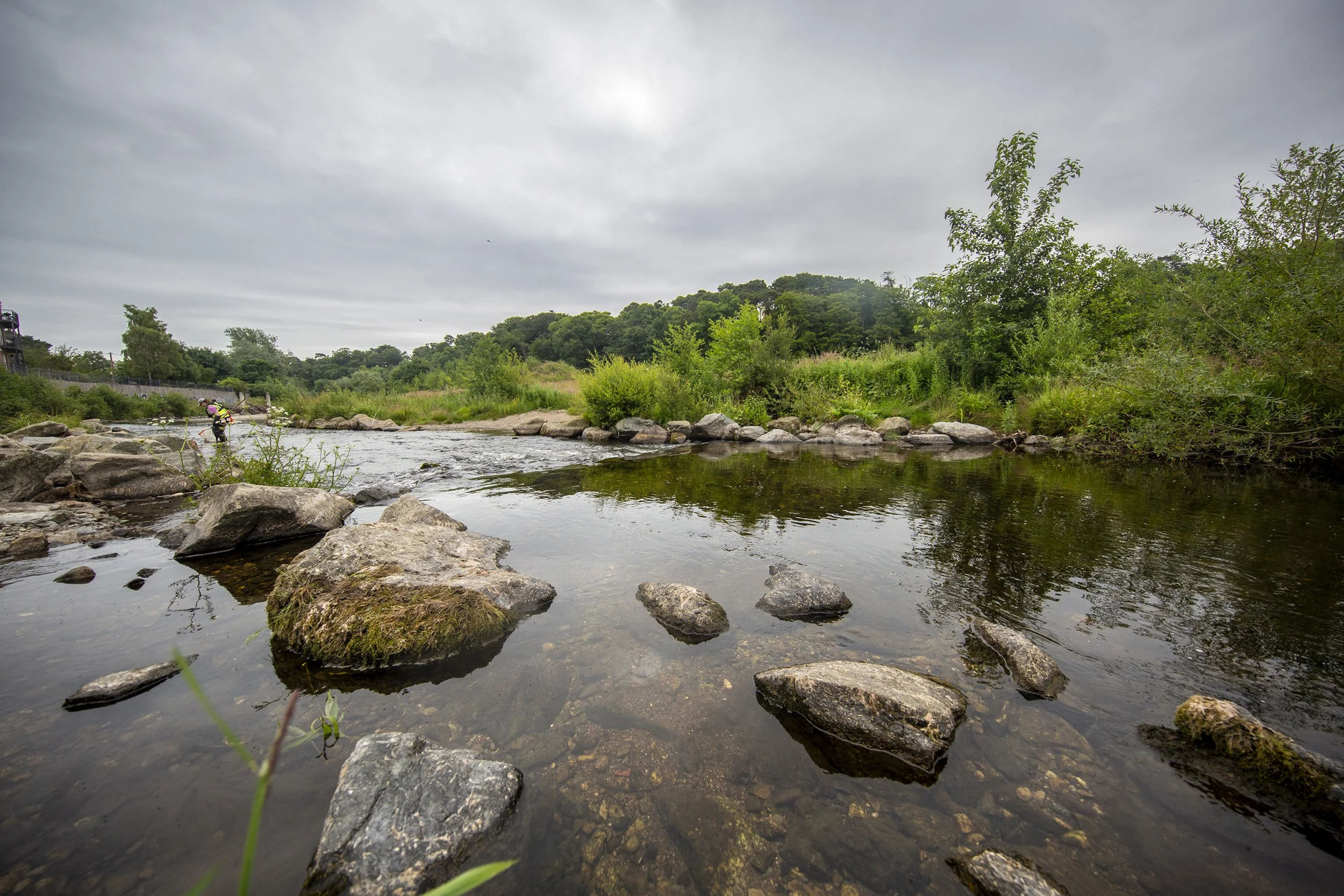
On Monday 24 June Catherine Bradley, Freshwaters Scientist with the EPA Ecological Monitoring and Assessment Unit, invited me to join her as she sampled water from the Lower Dargle River in Bray, County Wicklow. The Dargle is about 1km upstream of Bray town. In this photograph we see Catherine kick sampling in the distance, and the clear clean-looking water in the foreground. The kick sampling technique is used to disturb the river substrate and allow the collection of the macroinvertebrate community present at the river. The Dargle river is currently (June 2024) classified as good quality for macroinvertebrates.
Carrigtwohill, Co. Cork, Ireland T45CD93
Conservation
Fota Wildlife Park cares for several different animal species in danger of extinction. Through long-established Breeding programmes, which are run cooperatively with other institutions around the world, the Park is helping restore populations of some species while protecting the very survival of others.
Sustainability
Fota Island Resort recognises that it has a responsibility to the environment. Our aim is to comply with, and exceed where possible, our company’s legal obligations and codes of practice. We are committed to reducing our environmental impact and continually improving our environmental performance. This is an integral part of our business strategy and operating methods. We hope to inspire our customers, suppliers, and other stakeholders to follow this example.
Education
We know that wildlife matters! Our team are committed to raising awareness about the plight of many endangered species, we can help our younger visitors to understand their roles in protecting the world they are growing up in.
It costs approximately €120,000 per week to run Fota Wildlife Park.
For more information on the animals, go to
The Raven
The Heron
Chaffinch
Magpie
On 1 January 2020, camera in hand, I took up the 100 Days of Walking challenge. I walked right into Covid and never stopped.
As time passed I became more and more interested in the voice of nature, especially through the lens; in how the location, shapes, patterns, colours of nature hide a multitude of stories. How when the soul leaps in delight at nature, on closer inspection, the photograph embeds stories that reveal a whole other reality that lies within, beneath, above, caught in the wind. It can take you from ancient sphagnum moss speaking to the health of a patch of bog, to the rape of bogs for commercial imperatives. Stories that throw light on humanity’s inhumanity and humanity’s magnanimity – on our foolish and wise attributes, on our individual responsibilities, yet, from nature’s perspective, the culpability of the collective.
As works of art, they don’t need their stories known. The photographs are taken and selected because of their own integral visual appeal. Knowing more about an image is a choice we make, or not. I like this about them. If a leaf, or a bog, or plastic incongruently beautiful in the wind enters your visual heartland – the wall of your home or office – that alone creates a bond with nature.
Please mute sound
PAUL KANE GALLERY CHRISTMAS EXHIBITION 2023
Irish Architectural Institute, Merrion Square, Dublin 2.
Opening Wednesday 6 December at 6pm.
Duration 7-16 December (excl. weekends)
Noon to 5pm.
———————————-
ROYAL CANAL LINES
These are two images from an ongoing project called ‘PROJECT FLOATING’, this being Part 4 and titled ‘Royal Canal Lines’. The entire project is based along the Royal Canal close to my home. This is a departure from the three previous parts, in so far as it feels as if it has nothing to do with this photographer’s personal issues, but all to do with this photographer enjoying what the eye perceives, and striving a way to share with others the magic of what I see. Yet is is also ALL to do with the previous personal issues, in so far as I am free of the pain of them, and no longer afraid.
Taken looking directly into the Royal Canal at very close quarters, we see the bare tendrils of growth almost as a line drawing on the surface, then details of 'what lies beneath'. The composition is made at source, not cropped later. It is something of an expression of the obvious concept that all art has its teacher in nature. In these images, for example, I can see the quality of line work by of some of the greatest artists of our time, like Miro, Matisse and Picasso.
The project is on hold for the past year or more, due to ongoing works obstructing access to the canal from where I live. It has also become a little less safe to stroll along with a camera, but we are confident once the works have finished, the safety issue will be dealt with. I cannot tell you how much I look forward to that time, and continuing this concept!
Part of the impulse in making these images is to explore how nature itself may teach us how not to destroy our earth, or planet; how to avoid becoming extinct. Can it teach us before it’s too late? Can we be taught this lesson gently, or will it require nature to become violent towards humankind?
Seeing how nature in all its wonder took over during Covid, and how magical it felt to be inferior to nature, to look to it as my host and not the other way around, told me that frankly the natural world would be better off without us if we don’t ‘come to our spit’ and realise we must be respectful of our generous hosts. In some ways these images (only two here) are my way of saying thank you to what is on offer by my host, the earth, and allowing myself to do this with a sense of wonder, and freedom from the negativity of doomsday thoughts.
————————————————
The photographs framed and exhibited are approximately one meter wide, as large as I could make them allowing they may need to fit on the wall of someone’s home. But they need to be large. You cannot fully see on this website the detail involved. I wanted people to enter the gallery and first see the lines, then on closer inspection their eyes need to ‘scan’ it, rather than take it all in, in one go. They are a tale of two images: the line drawing element, then what lies beneath.
———————————-
PAULA T NOLAN
Royal Canal Lines I
89cm (W) x 60cm (H)
Archival pigment print on Photo Rag Pearl
Edition: 3 + 2AP
€950 (Framed)
€500 (Unframed)
———————————-
PAULA T NOLAN
Royal Canal Lines I I
89cm (W) x 60cm (H)
Archival pigment print on Photo Rag Pearl
Edition: 3 + 2AP
€950 (Framed)
€500 (Unframed)
———————————-
These photographs are all taken along a stretch of the Royal Canal between Sheriff Street and Drumcondra. You can see by the ice in the last few (photos begin with more recent), the project started in Winter. It was the winter of 2021.
During the winter of 2020-2021, my heart was broken. Walking with the camera was perhaps the only relief to be had from this hurt. I found myself drawn towards images that would be beautiful if only they hadn’t been hurt themselves, polluted, disrespected and betrayed. I have yet to meet a man or woman, a child even, who cannot express a love of the beauty of nature, yet these same people betray it by careless pollution. So these images tied in with my own feelings of betrayal and being disrespected. Did I see the beauty first, or the rubbish?
Definitely the beauty, followed by the rubbish, followed by the beauty possible in both together. I suppose you’d call it a terrible beauty. I know many people won’t be up for that. If the human condition is to err, for any kind of peace and forgiveness, we need to accept this; to accept a beauty that includes hurts and betrayals – those that happen to us, and those we perpetuate on others. It would be spring time, and ‘Project Floating 2’, before I could get up close and personal with this concept, and the psychology of destruction. How do we become mindless of our mark on our world?
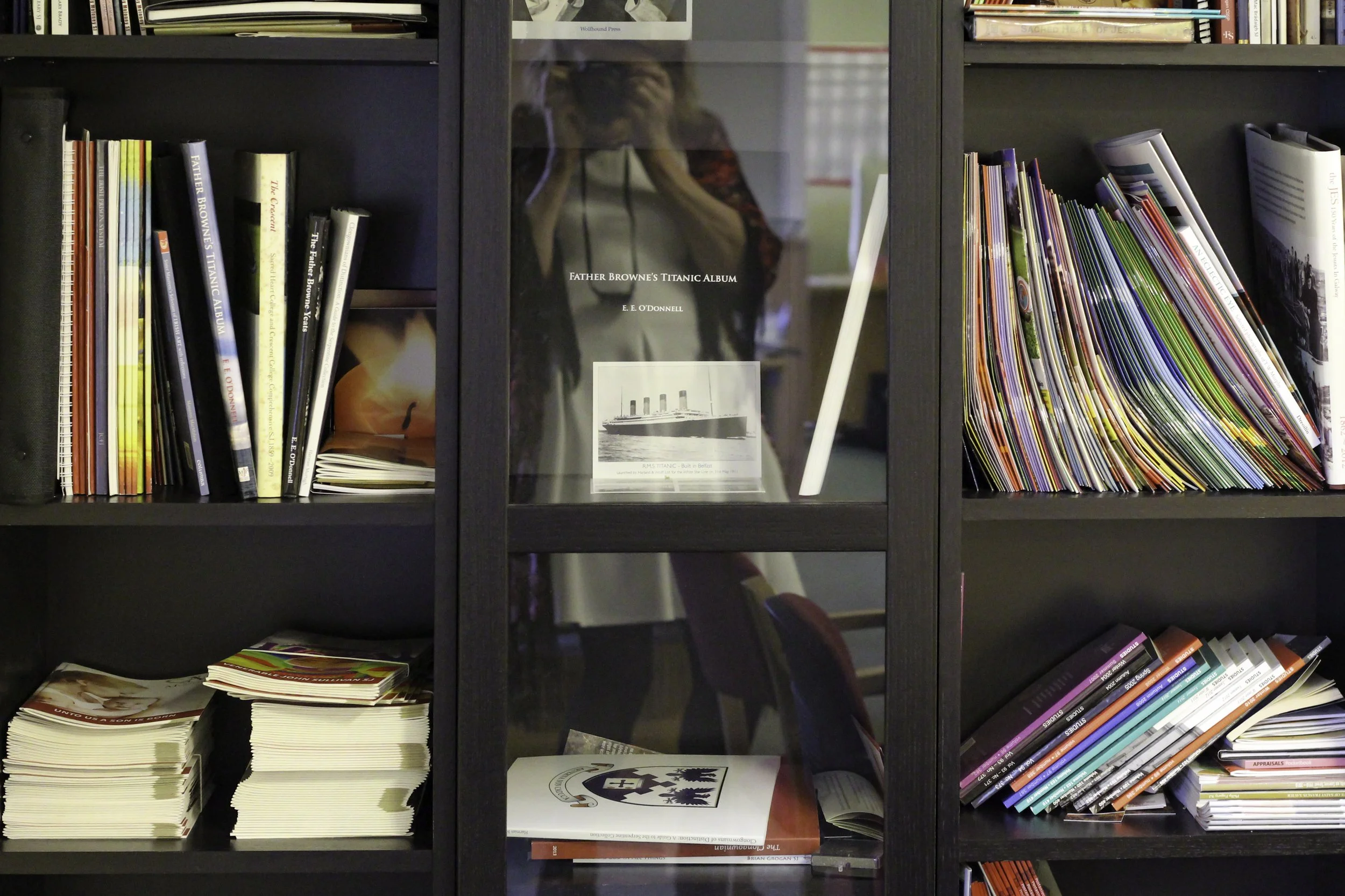
I worked closely with the Father Browne (1880-1960) photography collection for almost fourteen years, designing his books. I have chosen to treat these photographs as duotones, and the tone chosen is one used for many years for the printing of Father Browne’s photographs. It is a ‘secret’ combination, given to me once those holding the collection felt I could be trusted not to share it. It is subtle, and I often refer to it as a ‘champagne tint’.
Copy and paste link to Father Browne website: http://www.fatherbrowne.com/
All the PROJECT FLOATING photographs are taken along the same stretch of the Royal Canal, between Sheriff Street and Drumcondra.
Come spring time of 2021, the heartbreak I’d experienced through the winter began to abate, and I felt a defiance to emerge from it. Getting up close and personal with the debris, which I’d hitherto photographed from a distance, wasn’t a conscious thing. Now, Instead of guessing the tin can way over there might be a Coca Cola can, now we can see the branding as clearly as any billboard poster. I loved the contexts around these discarded objects, as spring and eventually summer encased them with green tendrils, almost like a Venus flytrap for rubbish. I began to see how nature responded to the carelessness of humans in discarding of their rubbish. How attempts to heal the hurt covered it over at first, then over a very long period of time if the object was biodegradable, nature disposed of it. For non biodegradable objects, the harm is permanent and cumulative. It may be hidden, but that is no harm reduction, as any dredge of waterways will contest.
These images are composed by standing as close to the edge as is possible without falling into the water, gaining a steady foot and centring the subject.
Eventually these shots finally began to overlap with taking shots with NO rubbish, some contained in PROJECT FLOATING 3.
All the PROJECT FLOATING photographs are taken along the same stretch of the Royal Canal, between Sheriff Street and Drumcondra.
It took a long journey through a dark winter, into spring, then summer, before I was able to see pure nature without the pollution that had hitherto so endeared itself to me. I was finally able to see the world without hurt eyes, or what I sometimes call ‘The Crippled Eye’. There is so much going on underwater alongside these growths, small insects darting, light dappling off the tiniest tendril, the wind making ripples then stopping to take another breath.
For ‘PROJECT FLOATING 1’, I walked fast, stopped for seconds only, then snapped. For ‘PROJECT FLOATING 2’, I stopped for longer periods of time, went up close to the water, took care composing the final image. So for part three, I slowed down some more, taking longer again to compose each shot, making sure I was happy with the composition of the shapes, the light, what hit the four corners. I found many of them began to resemble sections of Renaissance paintings, and was happy sometimes to work to achieve this by moving about and choosing one section over another. The only photos I cropped afterwards were ones I took specifically knowing how I would crop them later. This is how deliberate I was about when to pause a composition, and when to press that shutter button.
It struck me at this juncture that the understanding of the environment, ergo respect for it, may be linked to haste versus taking time. How true this may be in both choice of romantic partner (such hurt began the project) and in how we interact with nature. Being ‘mindful’ is something of a trend. Could this be harnessed in some way to protect nature?
I live in the North Inner City, a place where the boundaries enjoyed (or not) in leafier suburbs are non-existent. I like this. People say it’s not as safe as other parts of Dublin city, I say I don’t know about that; here I can see the person who is a risk to me from a mile away, but I’ve had more money stolen from me by people in suits than tracksuits. The former appear as stand up citizens, so the guard is down. Here, your guard is always up if you are out walking. So experientially, I feel safer.
What has all this got to do with pollution? It’s to do with ownership. How to make people take ownership (metaphorically) of their surroundings and be mindful of it, proud to keep it clean. In that context, working with the local community is the method I find best, and any campaigning I do is on the the X platform.
https://twitter.com/IrishPTNolan
—————————————————
Making fast decisions, as with ‘PROJECT FLOATING 1’, is something I’m trained to do in my decades working with design for print. Especially for newspapers and magazines with tight deadlines. You become highly attuned to what is the best image, what works best in a particular context, and to making those choices in nanno seconds. I bring this to photography in spades, along with decades of looking at various genres of painting and other art forms. Sometimes I can feel these various levels of experience join forces almost without my willing them to do so, then ‘snap’, the image.
I love herons. I also love Caravaggio paintings. When the light obeys, both loves meet.